


38 Results
Form:
books
books

Actions:
Price:
$15.50
(available to order)
Summary:
A Book of Migrations is a postcolonial revision of conventional travel literature. In her journey through Ireland, Rebecca Solnit portrays in microcosm a history made up of great tides of invasion, colonization, emigration, nomadism, and tourism. Her observations carve a new route through Ireland's history, literature and landscape.
$15.50
(available to order)
Summary:
A Book of Migrations is a postcolonial revision of conventional travel literature. In her journey through Ireland, Rebecca Solnit portrays in microcosm a history made up of great tides of invasion, colonization, emigration, nomadism, and tourism. Her observations carve a new route through Ireland's history, literature and landscape.
Title:
A book of migrations: some passages in Ireland
Actions:
Price:
$15.50
(available to order)
Summary:
A Book of Migrations is a postcolonial revision of conventional travel literature. In her journey through Ireland, Rebecca Solnit portrays in microcosm a history made up of great tides of invasion, colonization, emigration, nomadism, and tourism. Her observations carve a new route through Ireland's history, literature and landscape.
A book of migrations: some passages in Ireland
Actions:
Price:
$15.50
(available to order)
Summary:
A Book of Migrations is a postcolonial revision of conventional travel literature. In her journey through Ireland, Rebecca Solnit portrays in microcosm a history made up of great tides of invasion, colonization, emigration, nomadism, and tourism. Her observations carve a new route through Ireland's history, literature and landscape.
Form:
books
books
Publication:
June 1998, London, New York
June 1998, London, New York
Subject:
Landscape Theory
Landscape Theory
Form:
books
books
Actions:
Price:
$23.95
(available to order)
Summary:
To Rebecca Solnit, the word 'landscape' implies not only literal places but also the ground on which we invent our lives and confront our innermost troubles and desires. The organic world, to Solnit, gives rise to the social, political, and philosophical landscapes we inhabit. In these nineteen quirky, smart, and wryly humorous pieces, Solnit ranges across disciplines to(...)
$23.95
(available to order)
Summary:
To Rebecca Solnit, the word 'landscape' implies not only literal places but also the ground on which we invent our lives and confront our innermost troubles and desires. The organic world, to Solnit, gives rise to the social, political, and philosophical landscapes we inhabit. In these nineteen quirky, smart, and wryly humorous pieces, Solnit ranges across disciplines to(...)
Title:
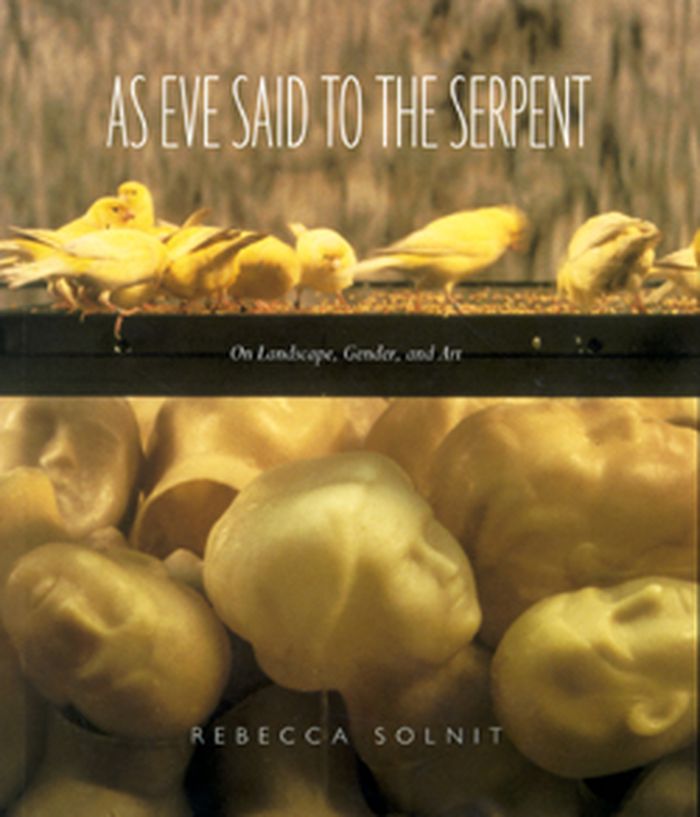
As Eve said to the serpent: on landscape, gender, and art
Actions:
Price:
$23.95
(available to order)
Summary:
To Rebecca Solnit, the word 'landscape' implies not only literal places but also the ground on which we invent our lives and confront our innermost troubles and desires. The organic world, to Solnit, gives rise to the social, political, and philosophical landscapes we inhabit. In these nineteen quirky, smart, and wryly humorous pieces, Solnit ranges across disciplines to explore nuclear test sites, deserts, clouds, caves, and the meaning of national borders - as weel as ideas of the feminine and the sublime as they relate to our physical and psychological terrains.
As Eve said to the serpent: on landscape, gender, and art
Actions:
Price:
$23.95
(available to order)
Summary:
To Rebecca Solnit, the word 'landscape' implies not only literal places but also the ground on which we invent our lives and confront our innermost troubles and desires. The organic world, to Solnit, gives rise to the social, political, and philosophical landscapes we inhabit. In these nineteen quirky, smart, and wryly humorous pieces, Solnit ranges across disciplines to explore nuclear test sites, deserts, clouds, caves, and the meaning of national borders - as weel as ideas of the feminine and the sublime as they relate to our physical and psychological terrains.
Form:
books
books
Publication:
April 2003
April 2003
Subject:
Landscape Theory
Landscape Theory
Form:
books
books

Actions:
Price:
$19.50
(available to order)
Summary:
The virtues of being open to new and transformative experiences are rhapsodized but not really illuminated in this discursive and somewhat gauzy set of linked essays. Cultural historian Solnit, an NBCC award winner for River of Shadows: Eadweard Muybridge and the Technological Wild West, allows the subject of getting lost to lead her where it will, from early American(...)
$19.50
(available to order)
Summary:
The virtues of being open to new and transformative experiences are rhapsodized but not really illuminated in this discursive and somewhat gauzy set of linked essays. Cultural historian Solnit, an NBCC award winner for River of Shadows: Eadweard Muybridge and the Technological Wild West, allows the subject of getting lost to lead her where it will, from early American(...)
Title:
A field guide to getting lost
Actions:
Price:
$19.50
(available to order)
Summary:
The virtues of being open to new and transformative experiences are rhapsodized but not really illuminated in this discursive and somewhat gauzy set of linked essays. Cultural historian Solnit, an NBCC award winner for River of Shadows: Eadweard Muybridge and the Technological Wild West, allows the subject of getting lost to lead her where it will, from early American captivity narratives to the avant-garde artist Yves Klein. She interlaces personal and familial histories of disorientation and reinvention, writing of her Russian Jewish forebears' arrival in the New World, her experiences driving around the American west and listening to country music, and her youthful immersion in the punk rock demimonde. Unfortunately, the conceit of embracing the unknown is not enough to impart thematic unity to these essays; one piece ties together the author's love affair with a reclusive man, desert fauna, Hitchcock's Vertigo and the blind seer Tiresias in ways that will indeed leave readers feeling lost. Solnit's writing is as abstract and intangible as her subject, veering between oceanic lyricism ("Blue is the color of longing for the distance you never arrive in") and pensées about the limitations of human understanding ("Between words is silence, around ink whiteness, behind every map's information is what's left out, the unmapped and unmappable") that seem profound but are actually banal once you think about them.
A field guide to getting lost
Actions:
Price:
$19.50
(available to order)
Summary:
The virtues of being open to new and transformative experiences are rhapsodized but not really illuminated in this discursive and somewhat gauzy set of linked essays. Cultural historian Solnit, an NBCC award winner for River of Shadows: Eadweard Muybridge and the Technological Wild West, allows the subject of getting lost to lead her where it will, from early American captivity narratives to the avant-garde artist Yves Klein. She interlaces personal and familial histories of disorientation and reinvention, writing of her Russian Jewish forebears' arrival in the New World, her experiences driving around the American west and listening to country music, and her youthful immersion in the punk rock demimonde. Unfortunately, the conceit of embracing the unknown is not enough to impart thematic unity to these essays; one piece ties together the author's love affair with a reclusive man, desert fauna, Hitchcock's Vertigo and the blind seer Tiresias in ways that will indeed leave readers feeling lost. Solnit's writing is as abstract and intangible as her subject, veering between oceanic lyricism ("Blue is the color of longing for the distance you never arrive in") and pensées about the limitations of human understanding ("Between words is silence, around ink whiteness, behind every map's information is what's left out, the unmapped and unmappable") that seem profound but are actually banal once you think about them.
Form:
books
books
Publication:
January 1900, New York, Toronto
January 1900, New York, Toronto
Subject:
Architectural Theory
Architectural Theory
Form:
books
books
Actions:
Price:
$36.00
(available to order)
Summary:
Wind, water, fire and molten rock constantly tear apart and resculpt the natural world we live in, and people have always struggled to create structures that will permanently establish their existence on the land. For more than four decades, Frank Gohlke has committed his camera lens to documenting that fraught relationship between people and place, and this retrospective(...)
$36.00
(available to order)
Summary:
Wind, water, fire and molten rock constantly tear apart and resculpt the natural world we live in, and people have always struggled to create structures that will permanently establish their existence on the land. For more than four decades, Frank Gohlke has committed his camera lens to documenting that fraught relationship between people and place, and this retrospective(...)
Subject:
Photography monographs
Photography monographs
Publication:
December 2007, New Mexico, Texas
December 2007, New Mexico, Texas
Title:
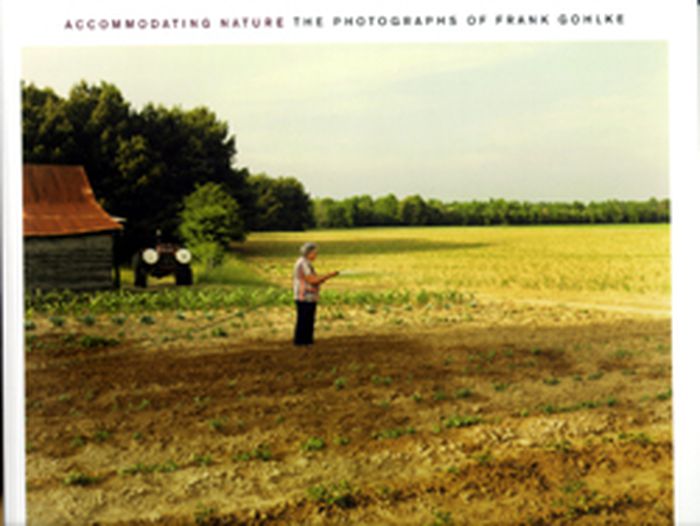
Accommodating Nature: the photographs of Frank Gohlke
Actions:
Price:
$36.00
(available to order)
Summary:
Wind, water, fire and molten rock constantly tear apart and resculpt the natural world we live in, and people have always struggled to create structures that will permanently establish their existence on the land. For more than four decades, Frank Gohlke has committed his camera lens to documenting that fraught relationship between people and place, and this retrospective collection of his work by curator John Rohrbach reveals how people carve out their spaces, accommodating nature. Published by the Amon Carter Museum and the Center for American Places.
Accommodating Nature: the photographs of Frank Gohlke
Actions:
Price:
$36.00
(available to order)
Summary:
Wind, water, fire and molten rock constantly tear apart and resculpt the natural world we live in, and people have always struggled to create structures that will permanently establish their existence on the land. For more than four decades, Frank Gohlke has committed his camera lens to documenting that fraught relationship between people and place, and this retrospective collection of his work by curator John Rohrbach reveals how people carve out their spaces, accommodating nature. Published by the Amon Carter Museum and the Center for American Places.
Form:
books
books
Publication:
December 2007, New Mexico, Texas
December 2007, New Mexico, Texas
Subject:
Photography monographs
Photography monographs
Form:
books
books
Actions:
Price:
$30.00
(available to order)
Summary:
Rebecca Solnit has made a vocation of journeying into difficult territory and reporting back, as an environmentalist, antiglobalization activist, and public intellectual. Storming the Gates of Paradise, an anthology of her essential essays from the past ten years, takes the reader from the Pyrenees to the U.S.-Mexican border, from San Francisco to London, from open sky to(...)
$30.00
(available to order)
Summary:
Rebecca Solnit has made a vocation of journeying into difficult territory and reporting back, as an environmentalist, antiglobalization activist, and public intellectual. Storming the Gates of Paradise, an anthology of her essential essays from the past ten years, takes the reader from the Pyrenees to the U.S.-Mexican border, from San Francisco to London, from open sky to(...)
Title:
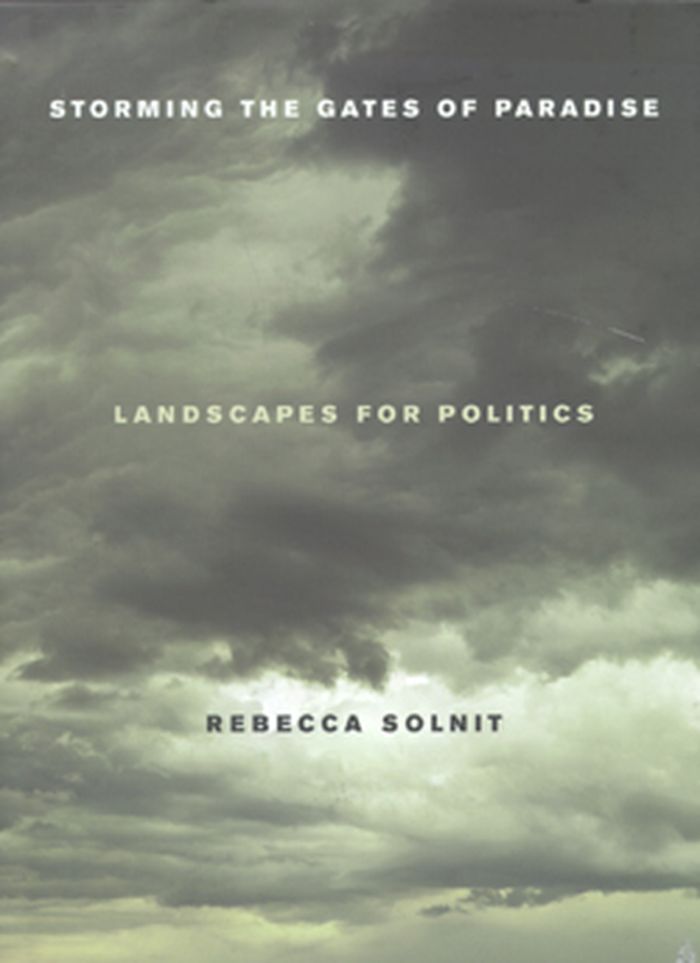
Storming the gates of paradise: Landscapes for politics
Actions:
Price:
$30.00
(available to order)
Summary:
Rebecca Solnit has made a vocation of journeying into difficult territory and reporting back, as an environmentalist, antiglobalization activist, and public intellectual. Storming the Gates of Paradise, an anthology of her essential essays from the past ten years, takes the reader from the Pyrenees to the U.S.-Mexican border, from San Francisco to London, from open sky to the deepest mines, and from the antislavery struggles of two hundred years ago to today's street protests. The nearly forty essays collected here comprise a unique guidebook to the American landscape after the millennium–not just the deserts, skies, gardens, and wilderness areas that have long made up Solnit's subject matter, but the social landscape of democracy and repression, of borders, ruins, and protests. She ventures into territories as dark as prison and as sublime as a broad vista, revealing beauty in the harshest landscape and political struggle in the most apparently serene view. Her introduction sets the tone and the book's overarching themes as she describes Thoreau, leaving the jail cell where he had been confined for refusing to pay war taxes and proceeding directly to his favorite huckleberry patch. In this way she links pleasure to politics, brilliantly demonstrating that the path to paradise has often run through prison.
Storming the gates of paradise: Landscapes for politics
Actions:
Price:
$30.00
(available to order)
Summary:
Rebecca Solnit has made a vocation of journeying into difficult territory and reporting back, as an environmentalist, antiglobalization activist, and public intellectual. Storming the Gates of Paradise, an anthology of her essential essays from the past ten years, takes the reader from the Pyrenees to the U.S.-Mexican border, from San Francisco to London, from open sky to the deepest mines, and from the antislavery struggles of two hundred years ago to today's street protests. The nearly forty essays collected here comprise a unique guidebook to the American landscape after the millennium–not just the deserts, skies, gardens, and wilderness areas that have long made up Solnit's subject matter, but the social landscape of democracy and repression, of borders, ruins, and protests. She ventures into territories as dark as prison and as sublime as a broad vista, revealing beauty in the harshest landscape and political struggle in the most apparently serene view. Her introduction sets the tone and the book's overarching themes as she describes Thoreau, leaving the jail cell where he had been confined for refusing to pay war taxes and proceeding directly to his favorite huckleberry patch. In this way she links pleasure to politics, brilliantly demonstrating that the path to paradise has often run through prison.
Form:
books
books
Publication:
May 2008, Berkeley
May 2008, Berkeley
Subject:
Architectural Theory
Architectural Theory
Form:
books
books

Actions:
Price:
$31.50
(available to order)
Summary:
How exactly has San Francisco's urban landscape changed in the hundred years since the earthquake and cataclysmic firestorms that destroyed three-quarters of the city in 1906? For this rephotography project, bringing past and present into dynamic juxtaposition, photographer Mark Klett has gone to the same locations pictured in forty-five historic photographs taken in the(...)
$31.50
(available to order)
Summary:
How exactly has San Francisco's urban landscape changed in the hundred years since the earthquake and cataclysmic firestorms that destroyed three-quarters of the city in 1906? For this rephotography project, bringing past and present into dynamic juxtaposition, photographer Mark Klett has gone to the same locations pictured in forty-five historic photographs taken in the(...)
Subject:
Photography monographs
Photography monographs
Publication:
March 2006, San Francisco
March 2006, San Francisco
Title:
After the ruins 1906 and 2006 : rephotographing the San Francisco earthquake and fire
Actions:
Price:
$31.50
(available to order)
Summary:
How exactly has San Francisco's urban landscape changed in the hundred years since the earthquake and cataclysmic firestorms that destroyed three-quarters of the city in 1906? For this rephotography project, bringing past and present into dynamic juxtaposition, photographer Mark Klett has gone to the same locations pictured in forty-five historic photographs taken in the days following the 1906 earthquake and fires and precisely duplicated each photograph's vantage point. The result is a comparison that challenges our preconceptions about time, history, and culture. This publication accompanies an exhibition at The Fine Arts Museums of San Francisco. After the Ruins, 1906 and 2006 features a vivid essay by noted environmental historian Philip Fradkin on the events surrounding and following the 1906 earthquake, which he describes as "the equivalent of an intensive, three-day bombing raid, complete with many tons of dynamite that acted as incendiary devices." A lyrical essay by acclaimed writer Rebecca Solnit considers the meaning of ruins, resurrection, and the evolving geography and history of San Francisco.
After the ruins 1906 and 2006 : rephotographing the San Francisco earthquake and fire
Actions:
Price:
$31.50
(available to order)
Summary:
How exactly has San Francisco's urban landscape changed in the hundred years since the earthquake and cataclysmic firestorms that destroyed three-quarters of the city in 1906? For this rephotography project, bringing past and present into dynamic juxtaposition, photographer Mark Klett has gone to the same locations pictured in forty-five historic photographs taken in the days following the 1906 earthquake and fires and precisely duplicated each photograph's vantage point. The result is a comparison that challenges our preconceptions about time, history, and culture. This publication accompanies an exhibition at The Fine Arts Museums of San Francisco. After the Ruins, 1906 and 2006 features a vivid essay by noted environmental historian Philip Fradkin on the events surrounding and following the 1906 earthquake, which he describes as "the equivalent of an intensive, three-day bombing raid, complete with many tons of dynamite that acted as incendiary devices." A lyrical essay by acclaimed writer Rebecca Solnit considers the meaning of ruins, resurrection, and the evolving geography and history of San Francisco.
Form:
books
books
Publication:
March 2006, San Francisco
March 2006, San Francisco
Subject:
Photography monographs
Photography monographs
Form:
books
books

Actions:
Price:
$35.00
(available to order)
Summary:
In Recollections of My Nonexistence, Rebecca Solnit describes her formation as a writer and as a feminist in 1980s San Francisco, in an atmosphere of gender violence on the street and throughout society and the exclusion of women from cultural arenas. She tells of being poor, hopeful, and adrift in the city that became her great teacher, and of the small apartment that,(...)
$35.00
(available to order)
Summary:
In Recollections of My Nonexistence, Rebecca Solnit describes her formation as a writer and as a feminist in 1980s San Francisco, in an atmosphere of gender violence on the street and throughout society and the exclusion of women from cultural arenas. She tells of being poor, hopeful, and adrift in the city that became her great teacher, and of the small apartment that,(...)
Title:
Recollections of my nonexistence: a memoir
Actions:
Price:
$35.00
(available to order)
Summary:
In Recollections of My Nonexistence, Rebecca Solnit describes her formation as a writer and as a feminist in 1980s San Francisco, in an atmosphere of gender violence on the street and throughout society and the exclusion of women from cultural arenas. She tells of being poor, hopeful, and adrift in the city that became her great teacher, and of the small apartment that, when she was nineteen, became the home in which she transformed herself. She explores the forces that liberated her as a person and as a writer–books themselves; the gay community that presented a new model of what else gender, family, and joy could mean; and her eventual arrival in the spacious landscapes and overlooked conflicts of the American West.
Recollections of my nonexistence: a memoir
Actions:
Price:
$35.00
(available to order)
Summary:
In Recollections of My Nonexistence, Rebecca Solnit describes her formation as a writer and as a feminist in 1980s San Francisco, in an atmosphere of gender violence on the street and throughout society and the exclusion of women from cultural arenas. She tells of being poor, hopeful, and adrift in the city that became her great teacher, and of the small apartment that, when she was nineteen, became the home in which she transformed herself. She explores the forces that liberated her as a person and as a writer–books themselves; the gay community that presented a new model of what else gender, family, and joy could mean; and her eventual arrival in the spacious landscapes and overlooked conflicts of the American West.
Form:
books
books
Publication:
March 2020
March 2020
Subject:
Critical Theory
Critical Theory
Form:
books
books

Title:
Orwell's roses
Orwell's roses
Actions:
Price:
$37.00
(available to order)
Summary:
Sparked by her unexpected encounter with the surviving roses he planted in 1936, Solnit’s account of this understudied aspect of Orwell’s life explores his writing and his actions—from going deep into the coal mines of England, fighting in the Spanish Civil War, critiquing Stalin when much of the international left still supported him (and then critiquing that left), to(...)
$37.00
(available to order)
Summary:
Sparked by her unexpected encounter with the surviving roses he planted in 1936, Solnit’s account of this understudied aspect of Orwell’s life explores his writing and his actions—from going deep into the coal mines of England, fighting in the Spanish Civil War, critiquing Stalin when much of the international left still supported him (and then critiquing that left), to(...)
Title:
Orwell's roses
Actions:
Price:
$37.00
(available to order)
Summary:
Sparked by her unexpected encounter with the surviving roses he planted in 1936, Solnit’s account of this understudied aspect of Orwell’s life explores his writing and his actions—from going deep into the coal mines of England, fighting in the Spanish Civil War, critiquing Stalin when much of the international left still supported him (and then critiquing that left), to his analysis of the relationship between lies and authoritarianism. Through Solnit’s celebrated ability to draw unexpected connections, readers encounter the photographer Tina Modotti’s roses and her Stalinism, Stalin’s obsession with forcing lemons to grow in impossibly cold conditions, Orwell’s slave-owning ancestors in Jamaica, Jamaica Kincaid’s critique of colonialism and imperialism in the flower garden, and the brutal rose industry in Colombia that supplies the American market. The book draws to a close with a rereading of ''Nineteen Eighty-Four'' that completes her portrait of a more hopeful Orwell, as well as a reflection on pleasure, beauty, and joy as acts of resistance.
Orwell's roses
Actions:
Price:
$37.00
(available to order)
Summary:
Sparked by her unexpected encounter with the surviving roses he planted in 1936, Solnit’s account of this understudied aspect of Orwell’s life explores his writing and his actions—from going deep into the coal mines of England, fighting in the Spanish Civil War, critiquing Stalin when much of the international left still supported him (and then critiquing that left), to his analysis of the relationship between lies and authoritarianism. Through Solnit’s celebrated ability to draw unexpected connections, readers encounter the photographer Tina Modotti’s roses and her Stalinism, Stalin’s obsession with forcing lemons to grow in impossibly cold conditions, Orwell’s slave-owning ancestors in Jamaica, Jamaica Kincaid’s critique of colonialism and imperialism in the flower garden, and the brutal rose industry in Colombia that supplies the American market. The book draws to a close with a rereading of ''Nineteen Eighty-Four'' that completes her portrait of a more hopeful Orwell, as well as a reflection on pleasure, beauty, and joy as acts of resistance.
Form:
books
books
Publication:
October 2021
October 2021
Subject:
Literature and poetry
Literature and poetry


