


49 Results
Form:
books
books

Actions:
Price:
$54.99
(available in store)
Summary:
There is almost nothing new left to say about the urgent need to reduce our devastating impact on the biosphere that supports us. In architectural terms, we have been told since the 1960s that mainstream architecture is not engaged enough with the environmental consequences of what it produces and how it produces it. The usual approach is to propose new ways of designing(...)
$54.99
(available in store)
Summary:
There is almost nothing new left to say about the urgent need to reduce our devastating impact on the biosphere that supports us. In architectural terms, we have been told since the 1960s that mainstream architecture is not engaged enough with the environmental consequences of what it produces and how it produces it. The usual approach is to propose new ways of designing(...)
Title:
Revolution? Architecture and the antropocene
Actions:
Price:
$54.99
(available in store)
Summary:
There is almost nothing new left to say about the urgent need to reduce our devastating impact on the biosphere that supports us. In architectural terms, we have been told since the 1960s that mainstream architecture is not engaged enough with the environmental consequences of what it produces and how it produces it. The usual approach is to propose new ways of designing and building to persuade the reader of the centrality of environmental concerns. But too many readers have remained resolutely unpersuaded over decades. In four sharp, interlocking essays, this book asks why the majority of the architectural profession and its clients still only pay lip service to the importance of the environmental. In each essay, therefore, are examples of innovative and determined people pursuing other ways of practicing architecture and other ways of training architects for this critical century, who are pulling the model of a nature-centric practice out of the margins and into the centre.
Revolution? Architecture and the antropocene
Actions:
Price:
$54.99
(available in store)
Summary:
There is almost nothing new left to say about the urgent need to reduce our devastating impact on the biosphere that supports us. In architectural terms, we have been told since the 1960s that mainstream architecture is not engaged enough with the environmental consequences of what it produces and how it produces it. The usual approach is to propose new ways of designing and building to persuade the reader of the centrality of environmental concerns. But too many readers have remained resolutely unpersuaded over decades. In four sharp, interlocking essays, this book asks why the majority of the architectural profession and its clients still only pay lip service to the importance of the environmental. In each essay, therefore, are examples of innovative and determined people pursuing other ways of practicing architecture and other ways of training architects for this critical century, who are pulling the model of a nature-centric practice out of the margins and into the centre.
Form:
books
books
Publication:
April 2022
April 2022
Subject:
Architecture ecologies
Architecture ecologies
Form:
books
books

Price:
$25.95
(available to order)
Summary:
In the late 1960s the world was faced with impending disaster: the height of the Cold War, the end of oil and the decline of great cities throughout the world. Out of this crisis came a new generation that hoped to build a better future, influenced by visions of geodesic domes, walking cities and a meaningful connection with nature. In this work of cultural history,(...)
$25.95
(available to order)
Summary:
In the late 1960s the world was faced with impending disaster: the height of the Cold War, the end of oil and the decline of great cities throughout the world. Out of this crisis came a new generation that hoped to build a better future, influenced by visions of geodesic domes, walking cities and a meaningful connection with nature. In this work of cultural history,(...)
Title:
Last futures: natures, technology and the end of architecture
Actions:
Price:
$25.95
(available to order)
Summary:
In the late 1960s the world was faced with impending disaster: the height of the Cold War, the end of oil and the decline of great cities throughout the world. Out of this crisis came a new generation that hoped to build a better future, influenced by visions of geodesic domes, walking cities and a meaningful connection with nature. In this work of cultural history, architect Douglas Murphy traces the lost archeology of the present day through the works of thinkers and designers such as Buckminster Fuller, the ecological pioneer Stewart Brand, the Archigram architects who envisioned the Plug-In City in the ’60s, as well as co-operatives in Vienna, communes in the Californian desert and protesters on the streets of Paris. In this mind-bending account of the last avant-garde, we see not just the source of our current problems but also some powerful alternative futures.
Last futures: natures, technology and the end of architecture
Actions:
Price:
$25.95
(available to order)
Summary:
In the late 1960s the world was faced with impending disaster: the height of the Cold War, the end of oil and the decline of great cities throughout the world. Out of this crisis came a new generation that hoped to build a better future, influenced by visions of geodesic domes, walking cities and a meaningful connection with nature. In this work of cultural history, architect Douglas Murphy traces the lost archeology of the present day through the works of thinkers and designers such as Buckminster Fuller, the ecological pioneer Stewart Brand, the Archigram architects who envisioned the Plug-In City in the ’60s, as well as co-operatives in Vienna, communes in the Californian desert and protesters on the streets of Paris. In this mind-bending account of the last avant-garde, we see not just the source of our current problems but also some powerful alternative futures.
Form:
books
books
Publication:
July 2022
July 2022
Subject:
Architecture ecologies
Architecture ecologies
Form:
books
books

Actions:
Price:
$52.50
(available in store)
Summary:
Le risque majeur de notre époque est celui d’un crash territorial total. La métropolisation à marche forcée provoque la marchandisation des territoires et la dégradation des milieux qui les rendent habitables. Ce volume tente d’y répondre en réunissant chercheurs, concepteurs et activistes reconnus pour leur engagement. Leurs contributions examinent l’implication directe(...)
$52.50
(available in store)
Summary:
Le risque majeur de notre époque est celui d’un crash territorial total. La métropolisation à marche forcée provoque la marchandisation des territoires et la dégradation des milieux qui les rendent habitables. Ce volume tente d’y répondre en réunissant chercheurs, concepteurs et activistes reconnus pour leur engagement. Leurs contributions examinent l’implication directe(...)
Title:
Crash metropolis : Design écosocial et critique de la métropolisation des territoires
Actions:
Price:
$52.50
(available in store)
Summary:
Le risque majeur de notre époque est celui d’un crash territorial total. La métropolisation à marche forcée provoque la marchandisation des territoires et la dégradation des milieux qui les rendent habitables. Ce volume tente d’y répondre en réunissant chercheurs, concepteurs et activistes reconnus pour leur engagement. Leurs contributions examinent l’implication directe des designers, architectes, urbanistes et artistes pour comprendre leur responsabilité et les potentiels de « réhabitation » que ces pratiques peuvent porter. Dans ce travail de « recherche-édition » richement illustré les différents régimes de discours (textes et images) et les propositions graphiques soutiennent l’esprit critique et expérimental du projet. Sous la direction de Ludovic Duhem, philosophe, coordinateur de la recherche à l’École Supérieure d’Art et de Design de Valenciennes.
Crash metropolis : Design écosocial et critique de la métropolisation des territoires
Actions:
Price:
$52.50
(available in store)
Summary:
Le risque majeur de notre époque est celui d’un crash territorial total. La métropolisation à marche forcée provoque la marchandisation des territoires et la dégradation des milieux qui les rendent habitables. Ce volume tente d’y répondre en réunissant chercheurs, concepteurs et activistes reconnus pour leur engagement. Leurs contributions examinent l’implication directe des designers, architectes, urbanistes et artistes pour comprendre leur responsabilité et les potentiels de « réhabitation » que ces pratiques peuvent porter. Dans ce travail de « recherche-édition » richement illustré les différents régimes de discours (textes et images) et les propositions graphiques soutiennent l’esprit critique et expérimental du projet. Sous la direction de Ludovic Duhem, philosophe, coordinateur de la recherche à l’École Supérieure d’Art et de Design de Valenciennes.
Form:
books
books
Publication:
November 2022
November 2022
Subject:
Architecture ecologies
Architecture ecologies
Form:
books
books

Actions:
Price:
$39.95
(available to order)
Summary:
At the foot of the Argentine Andes, bulldozers are destroying forests and homes to create soy fields in an area already strewn with rubble from previous waves of destruction and violence. Based on ethnographic research in this region where the mountains give way to the Gran Chaco lowlands, Gastón R. Gordillo shows how geographic space is inseparable from the material,(...)
$39.95
(available to order)
Summary:
At the foot of the Argentine Andes, bulldozers are destroying forests and homes to create soy fields in an area already strewn with rubble from previous waves of destruction and violence. Based on ethnographic research in this region where the mountains give way to the Gran Chaco lowlands, Gastón R. Gordillo shows how geographic space is inseparable from the material,(...)
Title:
Rubble: the afterlife of destruction
Actions:
Price:
$39.95
(available to order)
Summary:
At the foot of the Argentine Andes, bulldozers are destroying forests and homes to create soy fields in an area already strewn with rubble from previous waves of destruction and violence. Based on ethnographic research in this region where the mountains give way to the Gran Chaco lowlands, Gastón R. Gordillo shows how geographic space is inseparable from the material, historical, and affective ruptures embodied in debris. His exploration of the significance of rubble encompasses lost cities, derelict train stations, overgrown Jesuit missions and Spanish forts, stranded steamships, mass graves, and razed forests. Examining the effects of these and other forms of debris on the people living on nearby ranches and farms, and in towns, Gordillo emphasizes that for the rural poor, the rubble left in the wake of capitalist and imperialist endeavors is not romanticized ruin but the material manifestation of the violence and dislocation that created it.
Rubble: the afterlife of destruction
Actions:
Price:
$39.95
(available to order)
Summary:
At the foot of the Argentine Andes, bulldozers are destroying forests and homes to create soy fields in an area already strewn with rubble from previous waves of destruction and violence. Based on ethnographic research in this region where the mountains give way to the Gran Chaco lowlands, Gastón R. Gordillo shows how geographic space is inseparable from the material, historical, and affective ruptures embodied in debris. His exploration of the significance of rubble encompasses lost cities, derelict train stations, overgrown Jesuit missions and Spanish forts, stranded steamships, mass graves, and razed forests. Examining the effects of these and other forms of debris on the people living on nearby ranches and farms, and in towns, Gordillo emphasizes that for the rural poor, the rubble left in the wake of capitalist and imperialist endeavors is not romanticized ruin but the material manifestation of the violence and dislocation that created it.
Form:
books
books
Publication:
August 2014
August 2014
Subject:
Architecture ecologies
Architecture ecologies
Form:
books
books
Title:
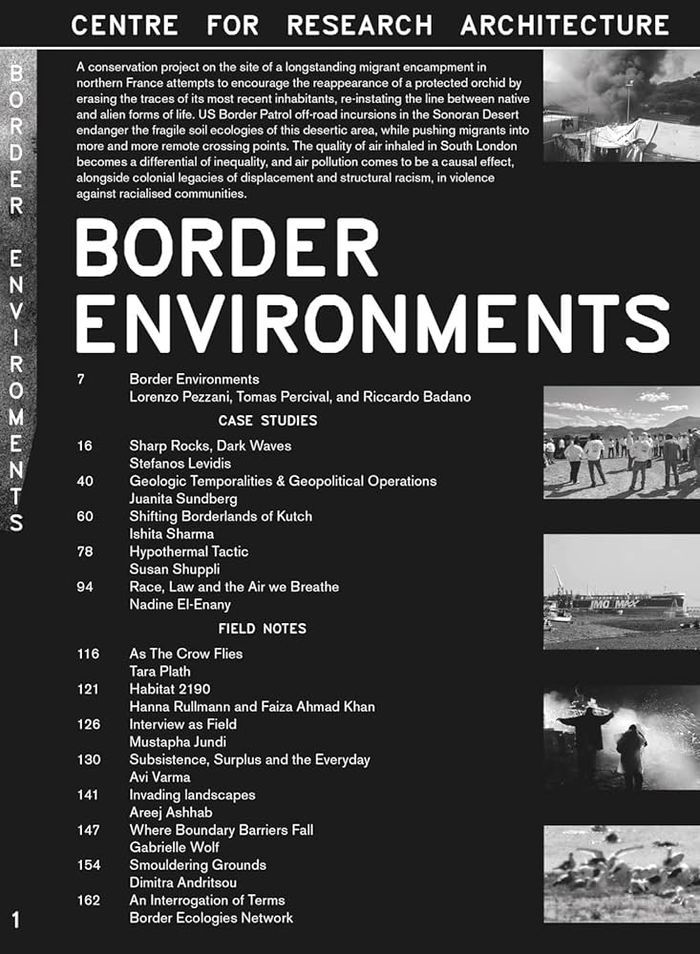
Border environments: CRA 1
Border environments: CRA 1
Actions:
Price:
$50.50
(available to order)
Summary:
Over the past fifteen years, the Centre for Research Architecture at Goldsmiths, University of London, has brought together established and emergent scholars who convene to work with each other and share their ideas and insights. These assemblies have produced a space of critical encounter for developing new investigative methods, expanded spatial practices, and(...)
$50.50
(available to order)
Summary:
Over the past fifteen years, the Centre for Research Architecture at Goldsmiths, University of London, has brought together established and emergent scholars who convene to work with each other and share their ideas and insights. These assemblies have produced a space of critical encounter for developing new investigative methods, expanded spatial practices, and(...)
Subject:
Architecture ecologies
Architecture ecologies
Publication:
September 2023
September 2023
Title:
Border environments: CRA 1
Actions:
Price:
$50.50
(available to order)
Summary:
Over the past fifteen years, the Centre for Research Architecture at Goldsmiths, University of London, has brought together established and emergent scholars who convene to work with each other and share their ideas and insights. These assemblies have produced a space of critical encounter for developing new investigative methods, expanded spatial practices, and speculative propositions designed to respond to and intervene in the urgent political conditions of our time. This new series invites the reader into this ever-evolving pedagogical context. Each book is organized around a specific spatial issue and brings together a heterogeneous range of materials and contributors. The first work in the series, ''Border Environments'', explores the entanglement of ecology and migration. It examines the interplay between discriminatory politics, emergent technologies, and bordering practices within the context of (constructed) natures by highlighting a variety of interventions, investigative techniques, visual projects, and modes of witnessing that address the role of both human and more-than-human actors in border struggles. As such, the book is also a provocation that can be used to identify and organize new lines of struggle connecting environmental and mobility justice.
Border environments: CRA 1
Actions:
Price:
$50.50
(available to order)
Summary:
Over the past fifteen years, the Centre for Research Architecture at Goldsmiths, University of London, has brought together established and emergent scholars who convene to work with each other and share their ideas and insights. These assemblies have produced a space of critical encounter for developing new investigative methods, expanded spatial practices, and speculative propositions designed to respond to and intervene in the urgent political conditions of our time. This new series invites the reader into this ever-evolving pedagogical context. Each book is organized around a specific spatial issue and brings together a heterogeneous range of materials and contributors. The first work in the series, ''Border Environments'', explores the entanglement of ecology and migration. It examines the interplay between discriminatory politics, emergent technologies, and bordering practices within the context of (constructed) natures by highlighting a variety of interventions, investigative techniques, visual projects, and modes of witnessing that address the role of both human and more-than-human actors in border struggles. As such, the book is also a provocation that can be used to identify and organize new lines of struggle connecting environmental and mobility justice.
Form:
books
books
Publication:
September 2023
September 2023
Subject:
Architecture ecologies
Architecture ecologies
Form:
books
books
Price:
$58.00
(available to order)
Summary:
Mobility shapes society in countless ways. Looking at society from the perspective of mobility reveals that its key moments of development coincide with the removal of obstacles to human flow—in the physical movement of people, goods, ideas, and spoken and written language. This book explores mobility in various essayistic modes, from visual essays to scientific essay to(...)
$58.00
(available to order)
Summary:
Mobility shapes society in countless ways. Looking at society from the perspective of mobility reveals that its key moments of development coincide with the removal of obstacles to human flow—in the physical movement of people, goods, ideas, and spoken and written language. This book explores mobility in various essayistic modes, from visual essays to scientific essay to(...)
Subject:
Architecture ecologies
Architecture ecologies
Publication:
December 2023
December 2023
Title:
Mobility society: Society seen through the lens of mobilities
Actions:
Price:
$58.00
(available to order)
Summary:
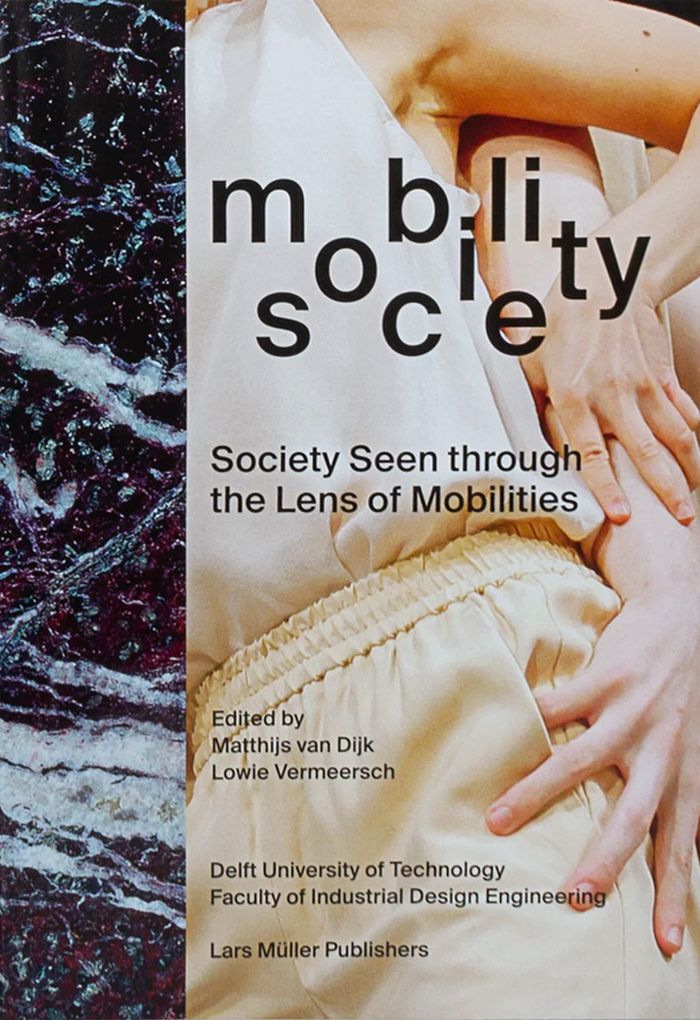
Mobility shapes society in countless ways. Looking at society from the perspective of mobility reveals that its key moments of development coincide with the removal of obstacles to human flow—in the physical movement of people, goods, ideas, and spoken and written language. This book explores mobility in various essayistic modes, from visual essays to scientific essay to broad cultural speculations. ''Mobility | Society'' addresses, among other topics, energy politics and oil’s grip on everyday life; urban transportation policy; the restrictions placed upon differently abled bodies; patterns of data flow; human mobility and Blackness; the politics of speed; concepts of "freedom" in relation to mobility; the appearance and experience of permanence in architectural and other objects; geological movement; and the politics of mobile phones. The design of the book encourages the reader to discover and explore unsuspected relations between mobilities and aspects of our evolving society.
Mobility society: Society seen through the lens of mobilities
Actions:
Price:
$58.00
(available to order)
Summary:
Mobility shapes society in countless ways. Looking at society from the perspective of mobility reveals that its key moments of development coincide with the removal of obstacles to human flow—in the physical movement of people, goods, ideas, and spoken and written language. This book explores mobility in various essayistic modes, from visual essays to scientific essay to broad cultural speculations. ''Mobility | Society'' addresses, among other topics, energy politics and oil’s grip on everyday life; urban transportation policy; the restrictions placed upon differently abled bodies; patterns of data flow; human mobility and Blackness; the politics of speed; concepts of "freedom" in relation to mobility; the appearance and experience of permanence in architectural and other objects; geological movement; and the politics of mobile phones. The design of the book encourages the reader to discover and explore unsuspected relations between mobilities and aspects of our evolving society.
Form:
books
books
Publication:
December 2023
December 2023
Subject:
Architecture ecologies
Architecture ecologies
Form:
books
books

Title:
Climate inheritance
Climate inheritance
Actions:
Price:
$45.00
(available to order)
Summary:
Climate Inheritance is a speculative design research publication that reckons with the complexity of world and heritage in the Anthropocene. The impacts of climate change on heritage sites—from Venice flooding to extinction in the Galápagos Islands—have garnered empathetic media attention in a landscape that has otherwise failed to communicate the urgency of the climate(...)
$45.00
(available to order)
Summary:
Climate Inheritance is a speculative design research publication that reckons with the complexity of world and heritage in the Anthropocene. The impacts of climate change on heritage sites—from Venice flooding to extinction in the Galápagos Islands—have garnered empathetic media attention in a landscape that has otherwise failed to communicate the urgency of the climate(...)
Subject:
Architecture ecologies
Architecture ecologies
Publication:
September 2023
September 2023
Title:
Climate inheritance
Actions:
Price:
$45.00
(available to order)
Summary:
Climate Inheritance is a speculative design research publication that reckons with the complexity of world and heritage in the Anthropocene. The impacts of climate change on heritage sites—from Venice flooding to extinction in the Galápagos Islands—have garnered empathetic media attention in a landscape that has otherwise failed to communicate the urgency of the climate crisis. In a strategic subversion of the media aura of heritage, DESIGN EARTH casts ten World Heritage sites as narrative figures to visualize pervasive climate risks—rising sea levels, extinction, droughts, air pollution, melting glaciers, material vulnerability, unchecked tourism, and the massive displacement of communities and cultural artifacts—all while situating the present emergency within the wreckages of other ends of world, replete with the salvages of extractivism, racism, and settler colonialism. The possibilities of such climate inheritances are narrated in drawing triptychs and mythologies that bequeath other worlds and values.
Climate inheritance
Actions:
Price:
$45.00
(available to order)
Summary:
Climate Inheritance is a speculative design research publication that reckons with the complexity of world and heritage in the Anthropocene. The impacts of climate change on heritage sites—from Venice flooding to extinction in the Galápagos Islands—have garnered empathetic media attention in a landscape that has otherwise failed to communicate the urgency of the climate crisis. In a strategic subversion of the media aura of heritage, DESIGN EARTH casts ten World Heritage sites as narrative figures to visualize pervasive climate risks—rising sea levels, extinction, droughts, air pollution, melting glaciers, material vulnerability, unchecked tourism, and the massive displacement of communities and cultural artifacts—all while situating the present emergency within the wreckages of other ends of world, replete with the salvages of extractivism, racism, and settler colonialism. The possibilities of such climate inheritances are narrated in drawing triptychs and mythologies that bequeath other worlds and values.
Form:
books
books
Publication:
September 2023
September 2023
Subject:
Architecture ecologies
Architecture ecologies
Form:
books
books

Price:
$60.00
(available in store)
Summary:
This book is an extended visual essay of ideas, images, drawings and projects that follows the work of Alper Derinbogaz over the past decade, framing an approach based on empathy with earth. Exploring architecture through the lens of evolution, ''Geospaces'' traces relationships between topography, geology, genetics, ecologies, and construction technologies, arguing that(...)
$60.00
(available in store)
Summary:
This book is an extended visual essay of ideas, images, drawings and projects that follows the work of Alper Derinbogaz over the past decade, framing an approach based on empathy with earth. Exploring architecture through the lens of evolution, ''Geospaces'' traces relationships between topography, geology, genetics, ecologies, and construction technologies, arguing that(...)
Title:
Geospaces: Continuities between humans, spaces, and the earth
Actions:
Price:
$60.00
(available in store)
Summary:
This book is an extended visual essay of ideas, images, drawings and projects that follows the work of Alper Derinbogaz over the past decade, framing an approach based on empathy with earth. Exploring architecture through the lens of evolution, ''Geospaces'' traces relationships between topography, geology, genetics, ecologies, and construction technologies, arguing that a hybrid approach to making will shape our future habitats.
Geospaces: Continuities between humans, spaces, and the earth
Actions:
Price:
$60.00
(available in store)
Summary:
This book is an extended visual essay of ideas, images, drawings and projects that follows the work of Alper Derinbogaz over the past decade, framing an approach based on empathy with earth. Exploring architecture through the lens of evolution, ''Geospaces'' traces relationships between topography, geology, genetics, ecologies, and construction technologies, arguing that a hybrid approach to making will shape our future habitats.
Form:
books
books
Publication:
August 2023
August 2023
Subject:
Architecture ecologies
Architecture ecologies
Form:
books
books

Actions:
Price:
$54.95
(available to order)
Summary:
This book presents conflicting definitions and concepts of architects and designers and the parallel histories of their intellectual positions toward environmental thought from the 19th century to today. It showcases that ecological design starts with the reconceptualization of the world as a complex system of flows rather than a discrete compilation of objects, which(...)
$54.95
(available to order)
Summary:
This book presents conflicting definitions and concepts of architects and designers and the parallel histories of their intellectual positions toward environmental thought from the 19th century to today. It showcases that ecological design starts with the reconceptualization of the world as a complex system of flows rather than a discrete compilation of objects, which(...)
Title:
Histories of ecological design: an unfinished encyclopedia
Actions:
Price:
$54.95
(available to order)
Summary:
This book presents conflicting definitions and concepts of architects and designers and the parallel histories of their intellectual positions toward environmental thought from the 19th century to today. It showcases that ecological design starts with the reconceptualization of the world as a complex system of flows rather than a discrete compilation of objects, which visual artist and theorist György Kepes has described as one of the fundamental reorientations of the 20th century. To survey the formation of this field, the history of ecological design will not be exclusively examined chronologically, but also in connected worldviews, each rendering evolving perceptions of nature, its relation to culture, and the occupation of the natural world by human and non-human subjects.
Histories of ecological design: an unfinished encyclopedia
Actions:
Price:
$54.95
(available to order)
Summary:
This book presents conflicting definitions and concepts of architects and designers and the parallel histories of their intellectual positions toward environmental thought from the 19th century to today. It showcases that ecological design starts with the reconceptualization of the world as a complex system of flows rather than a discrete compilation of objects, which visual artist and theorist György Kepes has described as one of the fundamental reorientations of the 20th century. To survey the formation of this field, the history of ecological design will not be exclusively examined chronologically, but also in connected worldviews, each rendering evolving perceptions of nature, its relation to culture, and the occupation of the natural world by human and non-human subjects.
Form:
books
books
Publication:
March 2024
March 2024
Subject:
Architecture ecologies
Architecture ecologies
Form:
books
books
Actions:
Price:
$60.00
(available to order)
Summary:
Archival power, silences, and absences profoundly shape and structure postcolonial landscapes, spaces, and urban environments by controlling bodies, histories, and interactions. This book explores pathways to dismantle these imperial entanglements by developing methodologies and plural epistemologies through an interdisciplinary dialog between history, memory politics,(...)
$60.00
(available to order)
Summary:
Archival power, silences, and absences profoundly shape and structure postcolonial landscapes, spaces, and urban environments by controlling bodies, histories, and interactions. This book explores pathways to dismantle these imperial entanglements by developing methodologies and plural epistemologies through an interdisciplinary dialog between history, memory politics,(...)
Subject:
Architecture ecologies
Architecture ecologies
Publication:
January 2024
January 2024
Title:
Unearthing traces: dismantling imperialist entanglements of archives, landscapes, and the built environment
Actions:
Price:
$60.00
(available to order)
Summary:
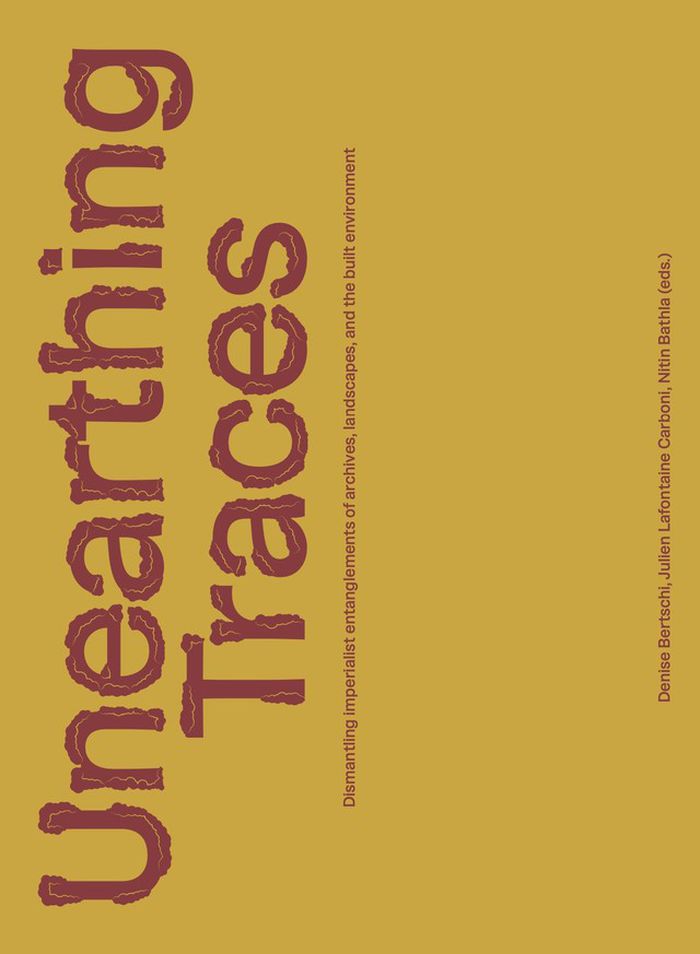
Archival power, silences, and absences profoundly shape and structure postcolonial landscapes, spaces, and urban environments by controlling bodies, histories, and interactions. This book explores pathways to dismantle these imperial entanglements by developing methodologies and plural epistemologies through an interdisciplinary dialog between history, memory politics, critical theory, and archival practice together with the fields of the built environment, landscape, urban studies, architecture, and the arts. Unearthing traces catalyzes critical discussions that not only challenge the objectivity and dismantle the neutrality surrounding current archival practices and archival institutions, but also question what constitutes the archive itself. The book unearths potential histories and minor narratives buried by the imperial production of pasts and silences. The diverse range of contributions in the book offers original research, discussions, positions, and tools and provides a critical resource for scholars, architects, artists, activists, and archivists who want to engage with landscapes and built environments in a critical and postcolonial perspective in relation to archival materials and practices.
Unearthing traces: dismantling imperialist entanglements of archives, landscapes, and the built environment
Actions:
Price:
$60.00
(available to order)
Summary:
Archival power, silences, and absences profoundly shape and structure postcolonial landscapes, spaces, and urban environments by controlling bodies, histories, and interactions. This book explores pathways to dismantle these imperial entanglements by developing methodologies and plural epistemologies through an interdisciplinary dialog between history, memory politics, critical theory, and archival practice together with the fields of the built environment, landscape, urban studies, architecture, and the arts. Unearthing traces catalyzes critical discussions that not only challenge the objectivity and dismantle the neutrality surrounding current archival practices and archival institutions, but also question what constitutes the archive itself. The book unearths potential histories and minor narratives buried by the imperial production of pasts and silences. The diverse range of contributions in the book offers original research, discussions, positions, and tools and provides a critical resource for scholars, architects, artists, activists, and archivists who want to engage with landscapes and built environments in a critical and postcolonial perspective in relation to archival materials and practices.
Form:
books
books
Publication:
January 2024
January 2024
Subject:
Architecture ecologies
Architecture ecologies


