


41 Results
Form:
books
books
Title:
Suburban Transformations
Suburban Transformations
Actions:
Price:
$44.95
(available to order)
Summary:
Smart Growth advocates, environmentalists, and New Urbanists have all tried in their own ways to spread the message of reforming current land use patterns. Their solutions are often criticized for being overly prescriptive, opposed to growth, or nostalgic, respectively. Suburban Transformations offers an alternative to these practices while synthesizing many of the ideas(...)
$44.95
(available to order)
Summary:
Smart Growth advocates, environmentalists, and New Urbanists have all tried in their own ways to spread the message of reforming current land use patterns. Their solutions are often criticized for being overly prescriptive, opposed to growth, or nostalgic, respectively. Suburban Transformations offers an alternative to these practices while synthesizing many of the ideas(...)
Title:
Suburban Transformations
Actions:
Price:
$44.95
(available to order)
Summary:
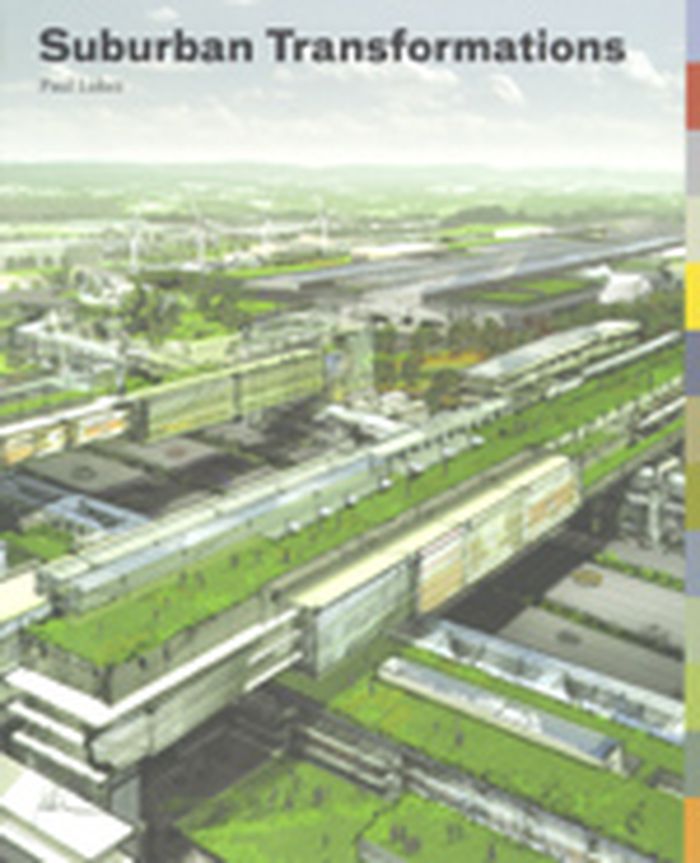
Smart Growth advocates, environmentalists, and New Urbanists have all tried in their own ways to spread the message of reforming current land use patterns. Their solutions are often criticized for being overly prescriptive, opposed to growth, or nostalgic, respectively. Suburban Transformations offers an alternative to these practices while synthesizing many of the ideas and proposals that they put forth. Five case studies provide fully expressed examples of the process, beginning with a sophisticated system of mapping and culminating in computer projections of likely future outcomes, giving the designer the ability to project changes in the community fabric and adding that knowledge to the designers kit of place-making tools.
Suburban Transformations
Actions:
Price:
$44.95
(available to order)
Summary:
Smart Growth advocates, environmentalists, and New Urbanists have all tried in their own ways to spread the message of reforming current land use patterns. Their solutions are often criticized for being overly prescriptive, opposed to growth, or nostalgic, respectively. Suburban Transformations offers an alternative to these practices while synthesizing many of the ideas and proposals that they put forth. Five case studies provide fully expressed examples of the process, beginning with a sophisticated system of mapping and culminating in computer projections of likely future outcomes, giving the designer the ability to project changes in the community fabric and adding that knowledge to the designers kit of place-making tools.
Form:
books
books
Publication:
August 2007, New York
August 2007, New York
Form:
books
books
Actions:
Price:
$27.95
(available to order)
Summary:
The city that never sleeps also never stops changing. And while New Yorkers are renowned for their trendsetting, this thought-provoking book argues that New York City itself has become a follower rather than a leader. Once-distinctive streets and neighborhoods have become awash in generic stores, apartment boxes, and garish signs and billboards. Legendary neighborhoods(...)
$27.95
(available to order)
Summary:
The city that never sleeps also never stops changing. And while New Yorkers are renowned for their trendsetting, this thought-provoking book argues that New York City itself has become a follower rather than a leader. Once-distinctive streets and neighborhoods have become awash in generic stores, apartment boxes, and garish signs and billboards. Legendary neighborhoods(...)
Title:
The suburbanization of New York : is the world's greatest city becoming just another town?
Actions:
Price:
$27.95
(available to order)
Summary:
The city that never sleeps also never stops changing. And while New Yorkers are renowned for their trendsetting, this thought-provoking book argues that New York City itself has become a follower rather than a leader. Once-distinctive streets and neighborhoods have become awash in generic stores, apartment boxes, and garish signs and billboards. Legendary neighborhoods (Little Italy, Hell's Kitchen, Harlem, the Lower East Side) have been smoothed over with cute monikers, remade for real-estate investment and for sale to the highest bidder. What does the future hold for the legendary metropolis, gateway to immigrants and strivers, magnet for builders and dealers, muse for artists and dreamers? Will the current political, economic, and social influences dull its once-famous creative edge and culture of opposition? What will become of the special allure of New York? "The suburbanization of New York" presents fourteen timely, provocative articles that explore the radical transformation unfolding in New York City and raise serious questions about the future of any metropolis struggling to maintain its unique identity.
The suburbanization of New York : is the world's greatest city becoming just another town?
Actions:
Price:
$27.95
(available to order)
Summary:
The city that never sleeps also never stops changing. And while New Yorkers are renowned for their trendsetting, this thought-provoking book argues that New York City itself has become a follower rather than a leader. Once-distinctive streets and neighborhoods have become awash in generic stores, apartment boxes, and garish signs and billboards. Legendary neighborhoods (Little Italy, Hell's Kitchen, Harlem, the Lower East Side) have been smoothed over with cute monikers, remade for real-estate investment and for sale to the highest bidder. What does the future hold for the legendary metropolis, gateway to immigrants and strivers, magnet for builders and dealers, muse for artists and dreamers? Will the current political, economic, and social influences dull its once-famous creative edge and culture of opposition? What will become of the special allure of New York? "The suburbanization of New York" presents fourteen timely, provocative articles that explore the radical transformation unfolding in New York City and raise serious questions about the future of any metropolis struggling to maintain its unique identity.
Form:
books
books
Publication:
March 2007, New York
March 2007, New York
Subject:
Suburbs
Suburbs
Form:
books
books

Price:
$28.95
(available to order)
Summary:
In "Don't call it sprawl", the current policy debate over urban sprawl is put into a broader analytical and historical context. The book informs people about the causes and implications of the changing metropolitan structure rather than trying to persuade them to adopt a panacea to all perceived problems. Bogart explains modern economic ideas about the structure of(...)
$28.95
(available to order)
Summary:
In "Don't call it sprawl", the current policy debate over urban sprawl is put into a broader analytical and historical context. The book informs people about the causes and implications of the changing metropolitan structure rather than trying to persuade them to adopt a panacea to all perceived problems. Bogart explains modern economic ideas about the structure of(...)
Title:
Don't call it sprawl : metropolitan structure in the twenty-first century
Actions:
Price:
$28.95
(available to order)
Summary:
In "Don't call it sprawl", the current policy debate over urban sprawl is put into a broader analytical and historical context. The book informs people about the causes and implications of the changing metropolitan structure rather than trying to persuade them to adopt a panacea to all perceived problems. Bogart explains modern economic ideas about the structure of metropolitan areas to people interested in understanding and influencing the pattern of growth in their city. Much of the debate about sprawl has been driven by a fundamental lack of understanding of the structure, functioning, and evolution of modern metropolitan areas. The book analyzes ways in which suburbs and cities (trading places) trade goods and services with each other. This approach helps us better understand commuting decisions, housing location, business location, and the impact of public policy in such areas as downtown redevelopment and public school reform.
Don't call it sprawl : metropolitan structure in the twenty-first century
Actions:
Price:
$28.95
(available to order)
Summary:
In "Don't call it sprawl", the current policy debate over urban sprawl is put into a broader analytical and historical context. The book informs people about the causes and implications of the changing metropolitan structure rather than trying to persuade them to adopt a panacea to all perceived problems. Bogart explains modern economic ideas about the structure of metropolitan areas to people interested in understanding and influencing the pattern of growth in their city. Much of the debate about sprawl has been driven by a fundamental lack of understanding of the structure, functioning, and evolution of modern metropolitan areas. The book analyzes ways in which suburbs and cities (trading places) trade goods and services with each other. This approach helps us better understand commuting decisions, housing location, business location, and the impact of public policy in such areas as downtown redevelopment and public school reform.
Form:
books
books
Publication:
October 2006, Cambridge
October 2006, Cambridge
Subject:
Suburbs
Suburbs
Form:
books
books
Title:
When America became suburban
When America became suburban
Actions:
Price:
$23.95
(available to order)
Summary:
In the decades after World War II, the United States became the most prosperous nation in the world and a superpower whose dominance was symbolized by the American suburbs. Spurred by the decline of its industrial cities and by mass suburbanization, people imagined a new national identity—one that emphasized consumerism, social mobility, and a suburban lifestyle. The(...)
$23.95
(available to order)
Summary:
In the decades after World War II, the United States became the most prosperous nation in the world and a superpower whose dominance was symbolized by the American suburbs. Spurred by the decline of its industrial cities and by mass suburbanization, people imagined a new national identity—one that emphasized consumerism, social mobility, and a suburban lifestyle. The(...)
Title:
When America became suburban
Actions:
Price:
$23.95
(available to order)
Summary:
In the decades after World War II, the United States became the most prosperous nation in the world and a superpower whose dominance was symbolized by the American suburbs. Spurred by the decline of its industrial cities and by mass suburbanization, people imagined a new national identity—one that emphasized consumerism, social mobility, and a suburban lifestyle. The urbanity of the city was lost. In "When America became suburban", Robert A. Beauregard examines this historic intersection of urban decline, mass suburbanization, domestic prosperity, and U.S. global aspirations as it unfolded from 1945 to the mid-1970s. Suburban expansion and the subsequent emergence of sprawling Sunbelt cities transformed every aspect of American society. Assessing the global implications of America’s suburban way of life as evidence of the superiority of capitalist democracy, Beauregard traces how the suburban ideology enabled America to distinguish itself from both the Communist bloc and Western Europe, thereby deepening its claim of exceptionalism on the world-historical stage. Placing the decline of America’s industrial cities and the rise of vast suburban housing and retail spaces into a cultural, political, and global context, Beauregard illuminates how these phenomena contributed to a changing notion of America’s identity at home and abroad. "When America became suburban" brings to light the profound implications of de-urbanization: from the siphoning of investments from the cities and the effect on the quality of life for those left behind to a profound shift in national identity.
When America became suburban
Actions:
Price:
$23.95
(available to order)
Summary:
In the decades after World War II, the United States became the most prosperous nation in the world and a superpower whose dominance was symbolized by the American suburbs. Spurred by the decline of its industrial cities and by mass suburbanization, people imagined a new national identity—one that emphasized consumerism, social mobility, and a suburban lifestyle. The urbanity of the city was lost. In "When America became suburban", Robert A. Beauregard examines this historic intersection of urban decline, mass suburbanization, domestic prosperity, and U.S. global aspirations as it unfolded from 1945 to the mid-1970s. Suburban expansion and the subsequent emergence of sprawling Sunbelt cities transformed every aspect of American society. Assessing the global implications of America’s suburban way of life as evidence of the superiority of capitalist democracy, Beauregard traces how the suburban ideology enabled America to distinguish itself from both the Communist bloc and Western Europe, thereby deepening its claim of exceptionalism on the world-historical stage. Placing the decline of America’s industrial cities and the rise of vast suburban housing and retail spaces into a cultural, political, and global context, Beauregard illuminates how these phenomena contributed to a changing notion of America’s identity at home and abroad. "When America became suburban" brings to light the profound implications of de-urbanization: from the siphoning of investments from the cities and the effect on the quality of life for those left behind to a profound shift in national identity.
Form:
books
books
Publication:
September 2006, Minneapolis, London
September 2006, Minneapolis, London
Subject:
Suburbs
Suburbs
Form:
books
books
Title:
The new suburban history
The new suburban history
Actions:
Price:
$29.95
(available to order)
Summary:
America has become a nation of suburbs. Confronting the popular image of suburbia as simply a refuge for affluent whites, "The new suburban history" rejects the stereotypes of a conformist and conflict-free suburbia. The seemingly calm streets of suburbia were, in fact, battlegrounds over race, class, and politics. With this collection, Kevin Kruse and Thomas Sugrue argue(...)
$29.95
(available to order)
Summary:
America has become a nation of suburbs. Confronting the popular image of suburbia as simply a refuge for affluent whites, "The new suburban history" rejects the stereotypes of a conformist and conflict-free suburbia. The seemingly calm streets of suburbia were, in fact, battlegrounds over race, class, and politics. With this collection, Kevin Kruse and Thomas Sugrue argue(...)
Title:
The new suburban history
Actions:
Price:
$29.95
(available to order)
Summary:
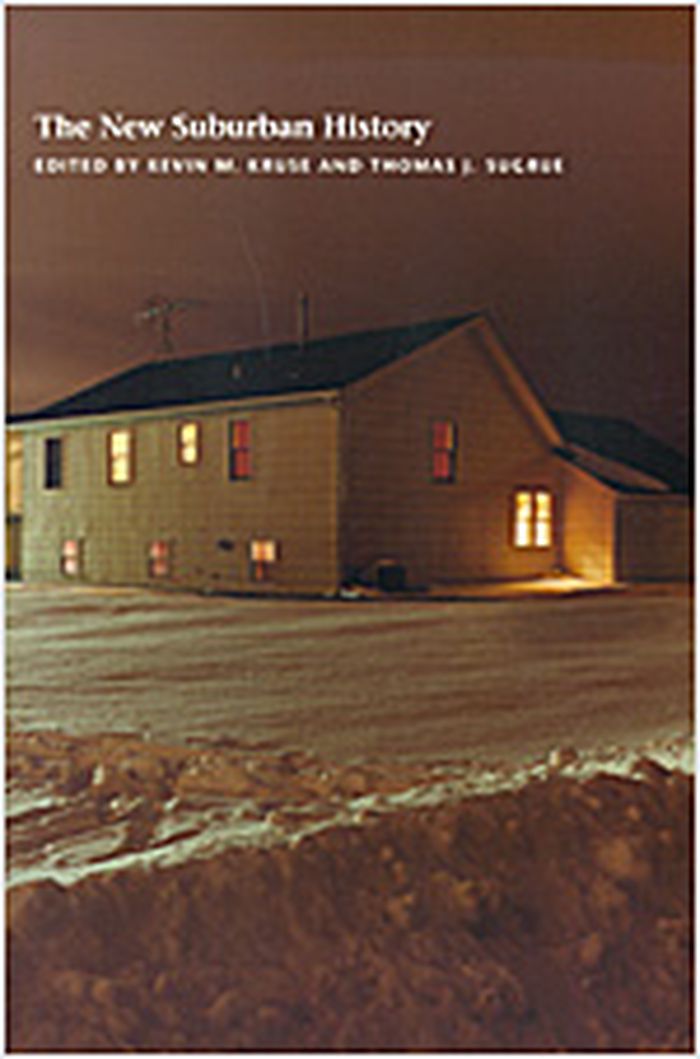
America has become a nation of suburbs. Confronting the popular image of suburbia as simply a refuge for affluent whites, "The new suburban history" rejects the stereotypes of a conformist and conflict-free suburbia. The seemingly calm streets of suburbia were, in fact, battlegrounds over race, class, and politics. With this collection, Kevin Kruse and Thomas Sugrue argue that suburbia must be understood as a central factor in the modern American experience. Kruse and Sugrue here collect ten essays—augmented by their provocative introduction—that challenge our understanding of suburbia. Drawing from original research on suburbs across the country, the contributors recast important political and social issues in the context of suburbanization. Their essays reveal the role suburbs have played in the transformation of American liberalism and conservatism; the contentious politics of race, class, and ethnicity; and debates about the environment, land use, and taxation. The contributors move the history of African Americans, Latinos, Asians, and blue-collar workers from the margins to the mainstream of suburban history. From this broad perspective, these historians explore the way suburbs affect—and are affected by—central cities, competing suburbs, and entire regions. The results, they show, are far-reaching: the emergence of a suburban America has reshaped national politics, fostered new social movements, and remade the American landscape. "The new suburban history" offers nothing less than a new American history—one that claims the nation cannot be fully understood without a history of American suburbs at its very center.
The new suburban history
Actions:
Price:
$29.95
(available to order)
Summary:
America has become a nation of suburbs. Confronting the popular image of suburbia as simply a refuge for affluent whites, "The new suburban history" rejects the stereotypes of a conformist and conflict-free suburbia. The seemingly calm streets of suburbia were, in fact, battlegrounds over race, class, and politics. With this collection, Kevin Kruse and Thomas Sugrue argue that suburbia must be understood as a central factor in the modern American experience. Kruse and Sugrue here collect ten essays—augmented by their provocative introduction—that challenge our understanding of suburbia. Drawing from original research on suburbs across the country, the contributors recast important political and social issues in the context of suburbanization. Their essays reveal the role suburbs have played in the transformation of American liberalism and conservatism; the contentious politics of race, class, and ethnicity; and debates about the environment, land use, and taxation. The contributors move the history of African Americans, Latinos, Asians, and blue-collar workers from the margins to the mainstream of suburban history. From this broad perspective, these historians explore the way suburbs affect—and are affected by—central cities, competing suburbs, and entire regions. The results, they show, are far-reaching: the emergence of a suburban America has reshaped national politics, fostered new social movements, and remade the American landscape. "The new suburban history" offers nothing less than a new American history—one that claims the nation cannot be fully understood without a history of American suburbs at its very center.
Form:
books
books
Publication:
January 1900, Chicago, London
January 1900, Chicago, London
Subject:
Suburbs
Suburbs
Form:
books
books
Title:
Sprawl, a compact history
Sprawl, a compact history
Actions:
Price:
$18.95
(available to order)
Summary:
The author demonstrates that urban sprawl is a natural process as old as the world's oldest cities, wherein large metropolises reach a point of maturity and those with financial means escape the congestion and high prices of city life. What has changed over the past century, the author says, is that an increasing number of citizens have achieved the financial means to(...)
$18.95
(available to order)
Summary:
The author demonstrates that urban sprawl is a natural process as old as the world's oldest cities, wherein large metropolises reach a point of maturity and those with financial means escape the congestion and high prices of city life. What has changed over the past century, the author says, is that an increasing number of citizens have achieved the financial means to(...)
Title:
Sprawl, a compact history
Actions:
Price:
$18.95
(available to order)
Summary:
The author demonstrates that urban sprawl is a natural process as old as the world's oldest cities, wherein large metropolises reach a point of maturity and those with financial means escape the congestion and high prices of city life. What has changed over the past century, the author says, is that an increasing number of citizens have achieved the financial means to participate in what was once an exclusive luxury of the wealthy. Bruegmann acknowledges that the effects on cities are not always positive, but he also demonstrates that many of the criticisms of suburban sprawl—e.g., that it is culturally deficient and environmentally noxious—are greatly exaggerated and ignore the very real benefits sprawl offers in terms of privacy, mobility and choice.
Sprawl, a compact history
Actions:
Price:
$18.95
(available to order)
Summary:
The author demonstrates that urban sprawl is a natural process as old as the world's oldest cities, wherein large metropolises reach a point of maturity and those with financial means escape the congestion and high prices of city life. What has changed over the past century, the author says, is that an increasing number of citizens have achieved the financial means to participate in what was once an exclusive luxury of the wealthy. Bruegmann acknowledges that the effects on cities are not always positive, but he also demonstrates that many of the criticisms of suburban sprawl—e.g., that it is culturally deficient and environmentally noxious—are greatly exaggerated and ignore the very real benefits sprawl offers in terms of privacy, mobility and choice.
Form:
books
books
Publication:
October 2006
October 2006
Subject:
Suburbs
Suburbs
Form:
books
books
Price:
$87.95
(available to order)
Summary:
How exactly do small towns become suburbs? How do country roads turn into commercial strips? And what can planners do to prevent these changes in the future? Using the state of Vermont as the rural ideal, the authors compare contemporary vs. traditional development to demonstrate how today's primary way of developing land - suburban sprawl - is forever changing the look(...)
$87.95
(available to order)
Summary:
How exactly do small towns become suburbs? How do country roads turn into commercial strips? And what can planners do to prevent these changes in the future? Using the state of Vermont as the rural ideal, the authors compare contemporary vs. traditional development to demonstrate how today's primary way of developing land - suburban sprawl - is forever changing the look(...)
Subject:
Suburbs
Suburbs
Publication:
February 2002, Chicago
February 2002, Chicago
Title:
Above and beyond : visualizing change in small towns and rural areas
Actions:
Price:
$87.95
(available to order)
Summary:
How exactly do small towns become suburbs? How do country roads turn into commercial strips? And what can planners do to prevent these changes in the future? Using the state of Vermont as the rural ideal, the authors compare contemporary vs. traditional development to demonstrate how today's primary way of developing land - suburban sprawl - is forever changing the look of rural American. Using a host of aerial photographs - many altered through computer simulation to illustrate how landscapes are transformed over time - "Above and beyond" argues for a return to traditional development patterns that produce more compact cities and towns. Highlighting widespread trends in contemporary land development - from fragmentation (our tendency to spread out) to separation (our tendencey to allocate separate areas of town for living, working, shopping and playing) - the authors offer case examples of coummunities that have succeeded in curbing those trends. They show how these communities have invigorated their town centers; lured home buyers back to town; integrated working, shopping and recreation areas; nurtured a sense of identity and community; rewritten land-use regulations to allow for more compact developing; and overcome the "cars rule" mentality of suburban development.
Above and beyond : visualizing change in small towns and rural areas
Actions:
Price:
$87.95
(available to order)
Summary:
How exactly do small towns become suburbs? How do country roads turn into commercial strips? And what can planners do to prevent these changes in the future? Using the state of Vermont as the rural ideal, the authors compare contemporary vs. traditional development to demonstrate how today's primary way of developing land - suburban sprawl - is forever changing the look of rural American. Using a host of aerial photographs - many altered through computer simulation to illustrate how landscapes are transformed over time - "Above and beyond" argues for a return to traditional development patterns that produce more compact cities and towns. Highlighting widespread trends in contemporary land development - from fragmentation (our tendency to spread out) to separation (our tendencey to allocate separate areas of town for living, working, shopping and playing) - the authors offer case examples of coummunities that have succeeded in curbing those trends. They show how these communities have invigorated their town centers; lured home buyers back to town; integrated working, shopping and recreation areas; nurtured a sense of identity and community; rewritten land-use regulations to allow for more compact developing; and overcome the "cars rule" mentality of suburban development.
Form:
books
books
Publication:
February 2002, Chicago
February 2002, Chicago
Subject:
Suburbs
Suburbs
Form:
books
books

Title:
Sprawl and suburbia
Sprawl and suburbia
Actions:
Price:
$28.95
(available to order)
Summary:
Sprawl is the single most significant and urgent issue in American land use at the turn of the twenty-first century. Efforts to limit and reform sprawl through legislative “Smart Growth” initiatives have been enacted around the country while the neotraditionalist New Urbanism has been embraced by many architects and urban planners. Yet most Americans persist in their(...)
$28.95
(available to order)
Summary:
Sprawl is the single most significant and urgent issue in American land use at the turn of the twenty-first century. Efforts to limit and reform sprawl through legislative “Smart Growth” initiatives have been enacted around the country while the neotraditionalist New Urbanism has been embraced by many architects and urban planners. Yet most Americans persist in their(...)
Title:
Sprawl and suburbia
Actions:
Price:
$28.95
(available to order)
Summary:
Sprawl is the single most significant and urgent issue in American land use at the turn of the twenty-first century. Efforts to limit and reform sprawl through legislative “Smart Growth” initiatives have been enacted around the country while the neotraditionalist New Urbanism has been embraced by many architects and urban planners. Yet most Americans persist in their desire to live farther and farther away from urban centers, moving to exurbs made up almost entirely of single-family residential houses and stand-alone shopping areas. "Sprawl and suburbia" brings together some of the foremost thinkers in the field to present in-depth diagnosis and critical analysis of the physical and social realities of exurban sprawl. Along with an introduction by Robert Fishman, these essays call for architects, urban planners, and landscape designers to work at mitigating the impact of sprawl on land and resources and improving the residential and commercial built environment as a whole. In place of vast residential exurbs, these writers offer visions of a fresh urbanism—appealing and persuasive models of life at greater density, with greater diversity, and within genuine communities. With sprawl losing the support of suburban citizens themselves as economic, environmental, and social costs are being paid, "Sprawl and suburbia" appears at a moment when design might achieve some critical influence over development—if architects and planners accept the challenge.
Sprawl and suburbia
Actions:
Price:
$28.95
(available to order)
Summary:
Sprawl is the single most significant and urgent issue in American land use at the turn of the twenty-first century. Efforts to limit and reform sprawl through legislative “Smart Growth” initiatives have been enacted around the country while the neotraditionalist New Urbanism has been embraced by many architects and urban planners. Yet most Americans persist in their desire to live farther and farther away from urban centers, moving to exurbs made up almost entirely of single-family residential houses and stand-alone shopping areas. "Sprawl and suburbia" brings together some of the foremost thinkers in the field to present in-depth diagnosis and critical analysis of the physical and social realities of exurban sprawl. Along with an introduction by Robert Fishman, these essays call for architects, urban planners, and landscape designers to work at mitigating the impact of sprawl on land and resources and improving the residential and commercial built environment as a whole. In place of vast residential exurbs, these writers offer visions of a fresh urbanism—appealing and persuasive models of life at greater density, with greater diversity, and within genuine communities. With sprawl losing the support of suburban citizens themselves as economic, environmental, and social costs are being paid, "Sprawl and suburbia" appears at a moment when design might achieve some critical influence over development—if architects and planners accept the challenge.
Form:
books
books
Publication:
November 2005, Minneapolis
November 2005, Minneapolis
Subject:
Suburbs
Suburbs
Form:
books
books
Actions:
Price:
$22.00
(available in store)
Summary:
This volume is one of three books in The Michigan Debates on Urbanism, a series that also features Everyday Urbanism and New Urbanism. Each book represents a distinct, inevitable, but still-emerging paradigm in contemporary urbanism, and is an elaboration of public debates held at the University of Michigan’s Taubman College of Architecture and Urban Planning during the(...)
$22.00
(available in store)
Summary:
This volume is one of three books in The Michigan Debates on Urbanism, a series that also features Everyday Urbanism and New Urbanism. Each book represents a distinct, inevitable, but still-emerging paradigm in contemporary urbanism, and is an elaboration of public debates held at the University of Michigan’s Taubman College of Architecture and Urban Planning during the(...)
Title:
Post urbanism & Re urbanism : Peter Eisenman vs. Barbara Littenberg and Steven Peterson, Michigan debates on urbanism vol. III
Actions:
Price:
$22.00
(available in store)
Summary:
This volume is one of three books in The Michigan Debates on Urbanism, a series that also features Everyday Urbanism and New Urbanism. Each book represents a distinct, inevitable, but still-emerging paradigm in contemporary urbanism, and is an elaboration of public debates held at the University of Michigan’s Taubman College of Architecture and Urban Planning during the winter of 2004. Peter Eisenman, acclaimed New York architect, author and theorist, presents several of his recent projects, including his team’s entry for the controversial Ground Zero competition at the World Trade Center site in lower Manhattan. This project and the larger body of his work are termed Post Urbanist by the series editor Douglas Kelbaugh. Post Urbanism refers to a critical, post-structuralist project, expressing avant-garde sensibilities and the techno-flow of a globalizing society. Barbara Littenberg and partner Steven Peterson, also well-known design practitioners from New York, present their entry into the Ground Zero competition, as well as other urban design projects that are characterized as ReUrbanism. Each side takes strong exception to the other’s work, leading to a heated discussion moderated by Roy Strickland, Director of the Master of Urban Design program at Taubman College.
Post urbanism & Re urbanism : Peter Eisenman vs. Barbara Littenberg and Steven Peterson, Michigan debates on urbanism vol. III
Actions:
Price:
$22.00
(available in store)
Summary:
This volume is one of three books in The Michigan Debates on Urbanism, a series that also features Everyday Urbanism and New Urbanism. Each book represents a distinct, inevitable, but still-emerging paradigm in contemporary urbanism, and is an elaboration of public debates held at the University of Michigan’s Taubman College of Architecture and Urban Planning during the winter of 2004. Peter Eisenman, acclaimed New York architect, author and theorist, presents several of his recent projects, including his team’s entry for the controversial Ground Zero competition at the World Trade Center site in lower Manhattan. This project and the larger body of his work are termed Post Urbanist by the series editor Douglas Kelbaugh. Post Urbanism refers to a critical, post-structuralist project, expressing avant-garde sensibilities and the techno-flow of a globalizing society. Barbara Littenberg and partner Steven Peterson, also well-known design practitioners from New York, present their entry into the Ground Zero competition, as well as other urban design projects that are characterized as ReUrbanism. Each side takes strong exception to the other’s work, leading to a heated discussion moderated by Roy Strickland, Director of the Master of Urban Design program at Taubman College.
Form:
books
books
Publication:
February 2005, Ann Arbor
February 2005, Ann Arbor
Subject:
Suburbs
Suburbs
Form:
books
books

Title:
The challenge of suburbia
The challenge of suburbia
Actions:
Price:
$54.99
(available to order)
Summary:
For an increasing number of people living in Western societies, suburbia is the primary living environment. For example, in the United States more people live in the suburbs than in cities. As a result, 75% of all new construction in the United States is in suburbia when only 5% of this is architect-designed. This new book from Architectural Design presents an(...)
$54.99
(available to order)
Summary:
For an increasing number of people living in Western societies, suburbia is the primary living environment. For example, in the United States more people live in the suburbs than in cities. As a result, 75% of all new construction in the United States is in suburbia when only 5% of this is architect-designed. This new book from Architectural Design presents an(...)
Title:
The challenge of suburbia
Actions:
Price:
$54.99
(available to order)
Summary:
For an increasing number of people living in Western societies, suburbia is the primary living environment. For example, in the United States more people live in the suburbs than in cities. As a result, 75% of all new construction in the United States is in suburbia when only 5% of this is architect-designed. This new book from Architectural Design presents an opportunity for architects to rake back a large sector of the housing and construction industry. It argues that suburbia offers a far greater potential for innovation than more conventional urban milieus.
The challenge of suburbia
Actions:
Price:
$54.99
(available to order)
Summary:
For an increasing number of people living in Western societies, suburbia is the primary living environment. For example, in the United States more people live in the suburbs than in cities. As a result, 75% of all new construction in the United States is in suburbia when only 5% of this is architect-designed. This new book from Architectural Design presents an opportunity for architects to rake back a large sector of the housing and construction industry. It argues that suburbia offers a far greater potential for innovation than more conventional urban milieus.
Form:
books
books
Publication:
September 2004, London
September 2004, London
Subject:
Suburbs
Suburbs


