


263 Résultats
Classification:
livres
livres

Titre:
Architecture without walls
Architecture without walls
Actions:
Prix:
$23.00
(disponible sur commande)
Résumé:
The texts included in this book present five architectural designs realized by Vera Buhß, Giacomo Gianetta, Konstantin Schimanowski, Katharina Schmidt, and Sum-Sum Shen. Instead of being generated and displayed in graphic media and approaching the object of design visually, these architectural environments have been conceived through auditory and literary practices. The(...)
$23.00
(disponible sur commande)
Résumé:
The texts included in this book present five architectural designs realized by Vera Buhß, Giacomo Gianetta, Konstantin Schimanowski, Katharina Schmidt, and Sum-Sum Shen. Instead of being generated and displayed in graphic media and approaching the object of design visually, these architectural environments have been conceived through auditory and literary practices. The(...)
Titre:
Architecture without walls
Actions:
Prix:
$23.00
(disponible sur commande)
Résumé:
The texts included in this book present five architectural designs realized by Vera Buhß, Giacomo Gianetta, Konstantin Schimanowski, Katharina Schmidt, and Sum-Sum Shen. Instead of being generated and displayed in graphic media and approaching the object of design visually, these architectural environments have been conceived through auditory and literary practices. The designs presented in this book provide accessibility to new architectural entities not by showing their constructive conditions of emergence, but instead by describing the emergent qualities that configure them as environments. Alex Arteaga’s research integrates aesthetic and philosophical practices relating to the emergence of sense and knowledge, architectural and art practices through phenomenological and enactivist approaches. He studied piano, music theory, composition, electroacoustic music, and architecture in Berlin and Barcelona, and received a PhD in philosophy from the Humboldt University. He heads the Auditory Architecture Research at the Berlin University of the Arts. Boris Hassenstein runs his architectural studio based in Berlin. A strong focus of his work is set on the aspects of construction as a process and collaboration in the genesis of architecture. He studied architecture in Berlin. Currently he teaches at the MA Sound Studies and Sonic Arts at the Berlin University of the Arts and is a member of the Auditory Architecture Research Unit at the Berlin University of the Arts.
Architecture without walls
Actions:
Prix:
$23.00
(disponible sur commande)
Résumé:
The texts included in this book present five architectural designs realized by Vera Buhß, Giacomo Gianetta, Konstantin Schimanowski, Katharina Schmidt, and Sum-Sum Shen. Instead of being generated and displayed in graphic media and approaching the object of design visually, these architectural environments have been conceived through auditory and literary practices. The designs presented in this book provide accessibility to new architectural entities not by showing their constructive conditions of emergence, but instead by describing the emergent qualities that configure them as environments. Alex Arteaga’s research integrates aesthetic and philosophical practices relating to the emergence of sense and knowledge, architectural and art practices through phenomenological and enactivist approaches. He studied piano, music theory, composition, electroacoustic music, and architecture in Berlin and Barcelona, and received a PhD in philosophy from the Humboldt University. He heads the Auditory Architecture Research at the Berlin University of the Arts. Boris Hassenstein runs his architectural studio based in Berlin. A strong focus of his work is set on the aspects of construction as a process and collaboration in the genesis of architecture. He studied architecture in Berlin. Currently he teaches at the MA Sound Studies and Sonic Arts at the Berlin University of the Arts and is a member of the Auditory Architecture Research Unit at the Berlin University of the Arts.
Classification:
livres
livres
Publication:
octobre 2016
octobre 2016
Sujet:
Muséologie
Muséologie
Classification:
livres
livres
Actions:
Prix:
$32.95
(disponible sur commande)
Résumé:
This anthology addresses the challenges of curating, presenting, and preserving new-media art—artworks that use digital technologies as media and emphasize process over object. As an art form that is inherently time based, dynamic, interactive, collaborative, customizable, and variable, new-media art resists objectification. It boldly challenges the traditional art(...)
$32.95
(disponible sur commande)
Résumé:
This anthology addresses the challenges of curating, presenting, and preserving new-media art—artworks that use digital technologies as media and emphasize process over object. As an art form that is inherently time based, dynamic, interactive, collaborative, customizable, and variable, new-media art resists objectification. It boldly challenges the traditional art(...)
Titre:
New media in the white cube and beyond
Actions:
Prix:
$32.95
(disponible sur commande)
Résumé:
This anthology addresses the challenges of curating, presenting, and preserving new-media art—artworks that use digital technologies as media and emphasize process over object. As an art form that is inherently time based, dynamic, interactive, collaborative, customizable, and variable, new-media art resists objectification. It boldly challenges the traditional art world's customary methods of presentation and documentation as well as its approach to collection and preservation. Edited and introduced by Christiane Paul and featuring contributions by prominent practitioners—institutional and independent curators, theorists, and conservators—this volume charts developments in an exciting field and addresses the conceptual, philosophical, and practical issues of both curating and presenting new-media art.
New media in the white cube and beyond
Actions:
Prix:
$32.95
(disponible sur commande)
Résumé:
This anthology addresses the challenges of curating, presenting, and preserving new-media art—artworks that use digital technologies as media and emphasize process over object. As an art form that is inherently time based, dynamic, interactive, collaborative, customizable, and variable, new-media art resists objectification. It boldly challenges the traditional art world's customary methods of presentation and documentation as well as its approach to collection and preservation. Edited and introduced by Christiane Paul and featuring contributions by prominent practitioners—institutional and independent curators, theorists, and conservators—this volume charts developments in an exciting field and addresses the conceptual, philosophical, and practical issues of both curating and presenting new-media art.
Classification:
livres
livres
Publication:
octobre 2008
octobre 2008
Classification:
livres
livres
Titre:
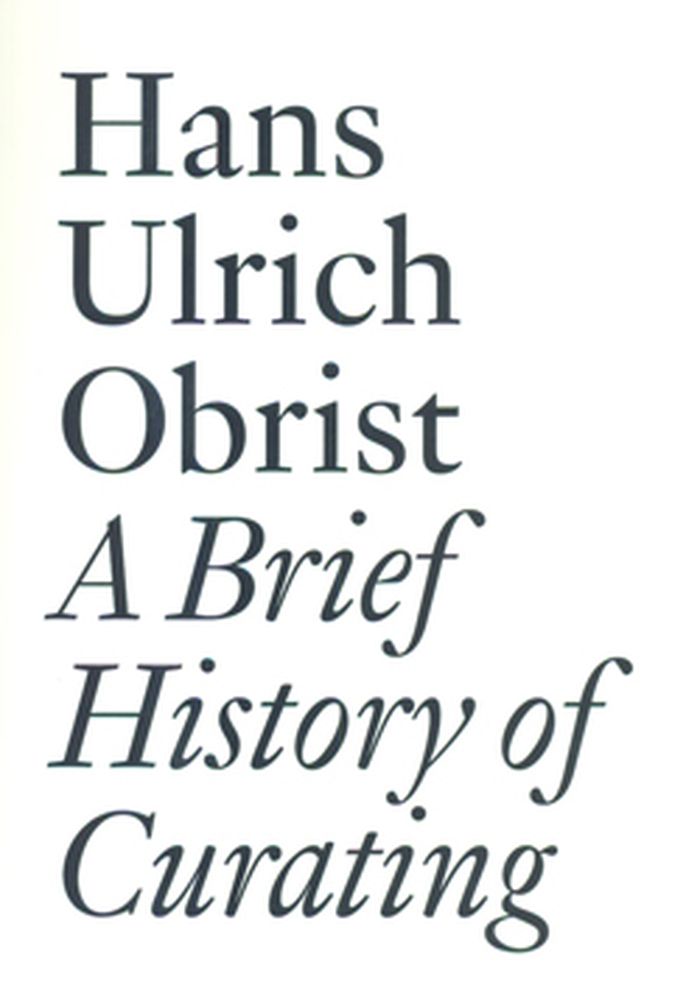
A brief history of curating
A brief history of curating
Actions:
Prix:
$33.95
(disponible sur commande)
Résumé:
This publication is dedicated to pioneering curators and presents a unique collection of interviews by Hans Ulrich Obrist: Anne d'Harnoncourt, Werner Hofman, Jean Leering, Franz Meyer, Seth Siegelaub, Walter Zanini, Johannes Cladders, Lucy Lippard, Walter Hopps, Pontus Hultén, and Harald Szeemann are gathered together in this volume. The contributions map the(...)
$33.95
(disponible sur commande)
Résumé:
This publication is dedicated to pioneering curators and presents a unique collection of interviews by Hans Ulrich Obrist: Anne d'Harnoncourt, Werner Hofman, Jean Leering, Franz Meyer, Seth Siegelaub, Walter Zanini, Johannes Cladders, Lucy Lippard, Walter Hopps, Pontus Hultén, and Harald Szeemann are gathered together in this volume. The contributions map the(...)
Titre:
A brief history of curating
Actions:
Prix:
$33.95
(disponible sur commande)
Résumé:
This publication is dedicated to pioneering curators and presents a unique collection of interviews by Hans Ulrich Obrist: Anne d'Harnoncourt, Werner Hofman, Jean Leering, Franz Meyer, Seth Siegelaub, Walter Zanini, Johannes Cladders, Lucy Lippard, Walter Hopps, Pontus Hultén, and Harald Szeemann are gathered together in this volume. The contributions map the development of the curatorial field, from early independent curating in the 1960s and 1970s and the experimental institutional programs developed in Europe and in the USA at this time, through Documenta and the development of biennales.
A brief history of curating
Actions:
Prix:
$33.95
(disponible sur commande)
Résumé:
This publication is dedicated to pioneering curators and presents a unique collection of interviews by Hans Ulrich Obrist: Anne d'Harnoncourt, Werner Hofman, Jean Leering, Franz Meyer, Seth Siegelaub, Walter Zanini, Johannes Cladders, Lucy Lippard, Walter Hopps, Pontus Hultén, and Harald Szeemann are gathered together in this volume. The contributions map the development of the curatorial field, from early independent curating in the 1960s and 1970s and the experimental institutional programs developed in Europe and in the USA at this time, through Documenta and the development of biennales.
Classification:
livres
livres
Publication:
septembre 2008, Zürich
septembre 2008, Zürich
Sujet:
Muséologie
Muséologie
Classification:
livres
livres
Actions:
Prix:
$20.00
(disponible sur commande)
Résumé:
Edité par l'Institut du patrimoine, UQAM. Incluant des contributions de John Impert (Restitution of Art amd Antiquities: What are the implications of Holocaust restitution for museums that collect antiquities?), Marie-Hélène Foisy (Quelle place pour les publications d'exposition dans les musées?), Laurie Guillemette (L'écrit dans l'exposition; Analyses et études de cas),(...)
$20.00
(disponible sur commande)
Résumé:
Edité par l'Institut du patrimoine, UQAM. Incluant des contributions de John Impert (Restitution of Art amd Antiquities: What are the implications of Holocaust restitution for museums that collect antiquities?), Marie-Hélène Foisy (Quelle place pour les publications d'exposition dans les musées?), Laurie Guillemette (L'écrit dans l'exposition; Analyses et études de cas),(...)
Titre:
Muséologies: les cahiers d'études supérieures, volume 2, avril 2008
Actions:
Prix:
$20.00
(disponible sur commande)
Résumé:
Edité par l'Institut du patrimoine, UQAM. Incluant des contributions de John Impert (Restitution of Art amd Antiquities: What are the implications of Holocaust restitution for museums that collect antiquities?), Marie-Hélène Foisy (Quelle place pour les publications d'exposition dans les musées?), Laurie Guillemette (L'écrit dans l'exposition; Analyses et études de cas), Geneviève Provencher-St-Cyr (L'action coopérative. Une proposition d'ancrage des musées dans la vie régionale), John Porter - directuer du Musée national des beaux-arts du Québec (Entrevue un), Marc Mayer - directeur du Musée d'art contemporain de Montréal (Entrevue deux), Virginie Soulier , Ève-Lyne Cayouette-Ashby, Émilie Allain, Nellie Demers(Colloque étudiant en muséologie de l'UQAM et de l'UDEM: Le rôle social du musée), Mathieu Dormaels (Rôle social des musées: une autre 'nouvelle' muséologie)
Muséologies: les cahiers d'études supérieures, volume 2, avril 2008
Actions:
Prix:
$20.00
(disponible sur commande)
Résumé:
Edité par l'Institut du patrimoine, UQAM. Incluant des contributions de John Impert (Restitution of Art amd Antiquities: What are the implications of Holocaust restitution for museums that collect antiquities?), Marie-Hélène Foisy (Quelle place pour les publications d'exposition dans les musées?), Laurie Guillemette (L'écrit dans l'exposition; Analyses et études de cas), Geneviève Provencher-St-Cyr (L'action coopérative. Une proposition d'ancrage des musées dans la vie régionale), John Porter - directuer du Musée national des beaux-arts du Québec (Entrevue un), Marc Mayer - directeur du Musée d'art contemporain de Montréal (Entrevue deux), Virginie Soulier , Ève-Lyne Cayouette-Ashby, Émilie Allain, Nellie Demers(Colloque étudiant en muséologie de l'UQAM et de l'UDEM: Le rôle social du musée), Mathieu Dormaels (Rôle social des musées: une autre 'nouvelle' muséologie)
Classification:
livres
livres
Publication:
avril 2008, Montréal
avril 2008, Montréal
Classification:
livres
livres
Prix:
$32.95
(disponible sur commande)
Résumé:
On his quest for the "Delirious museum", Storrie takes a journey that begins in the Louvre and continues through Paris, London, Los Angeles and Las Vegas. He encounters on his way the museum architecture of John Soane, Carlo Scarpa and Daniel Libeskind, the exhibitions of El Lissitsky and of Frederick Kiessler, and the work of artists as varied as Marcel Duchamps, Andy(...)
$32.95
(disponible sur commande)
Résumé:
On his quest for the "Delirious museum", Storrie takes a journey that begins in the Louvre and continues through Paris, London, Los Angeles and Las Vegas. He encounters on his way the museum architecture of John Soane, Carlo Scarpa and Daniel Libeskind, the exhibitions of El Lissitsky and of Frederick Kiessler, and the work of artists as varied as Marcel Duchamps, Andy(...)
Titre:
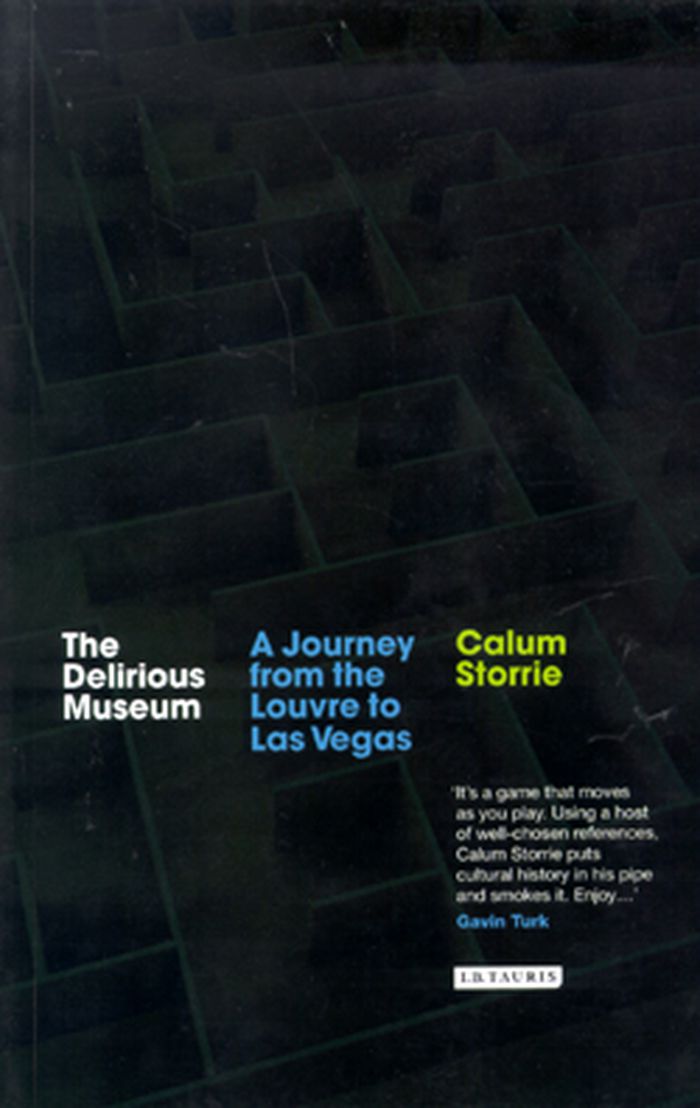
The delirious museum: a journey from the Louvre to Las Vegas
Actions:
Prix:
$32.95
(disponible sur commande)
Résumé:
On his quest for the "Delirious museum", Storrie takes a journey that begins in the Louvre and continues through Paris, London, Los Angeles and Las Vegas. He encounters on his way the museum architecture of John Soane, Carlo Scarpa and Daniel Libeskind, the exhibitions of El Lissitsky and of Frederick Kiessler, and the work of artists as varied as Marcel Duchamps, Andy Warhol, Marcel Broodthaers, Sophie Calle and Mark Dion. Calum Storrie is an architect, curator and exhibition designer, who has written extensively on museums.
The delirious museum: a journey from the Louvre to Las Vegas
Actions:
Prix:
$32.95
(disponible sur commande)
Résumé:
On his quest for the "Delirious museum", Storrie takes a journey that begins in the Louvre and continues through Paris, London, Los Angeles and Las Vegas. He encounters on his way the museum architecture of John Soane, Carlo Scarpa and Daniel Libeskind, the exhibitions of El Lissitsky and of Frederick Kiessler, and the work of artists as varied as Marcel Duchamps, Andy Warhol, Marcel Broodthaers, Sophie Calle and Mark Dion. Calum Storrie is an architect, curator and exhibition designer, who has written extensively on museums.
Classification:
livres
livres
Publication:
février 2008, London, New York
février 2008, London, New York
Sujet:
Muséologie
Muséologie
Classification:
livres
livres
Actions:
Prix:
$84.95
(disponible sur commande)
Résumé:
A Paris, au lendemain de l'exposition universelle de 1878, un musée de Sculpture comparée - le plus grand du monde - investit le palais du Trocadéro. Ce musée, dont Viollet-le-Duc rêvait depuis 1848, ne cessera d'accroître ses collections pendant un demi-siècle. En 1937, dans l'aile Paris du palais Chaillot construit sur le même emplacement, il cède la place au musée des(...)
$84.95
(disponible sur commande)
Résumé:
A Paris, au lendemain de l'exposition universelle de 1878, un musée de Sculpture comparée - le plus grand du monde - investit le palais du Trocadéro. Ce musée, dont Viollet-le-Duc rêvait depuis 1848, ne cessera d'accroître ses collections pendant un demi-siècle. En 1937, dans l'aile Paris du palais Chaillot construit sur le même emplacement, il cède la place au musée des(...)
Titre:
Le musée des monuments francais
Actions:
Prix:
$84.95
(disponible sur commande)
Résumé:
A Paris, au lendemain de l'exposition universelle de 1878, un musée de Sculpture comparée - le plus grand du monde - investit le palais du Trocadéro. Ce musée, dont Viollet-le-Duc rêvait depuis 1848, ne cessera d'accroître ses collections pendant un demi-siècle. En 1937, dans l'aile Paris du palais Chaillot construit sur le même emplacement, il cède la place au musée des Monuments français dont l'ambition, héritée de la Révolution française, est de proposer une anthologie de l'art national. En 2007, la dernière métamorphose du musée des Monuments français le place au cœur du dispositif de la Cité de l'architecture et du patrimoine, pour en faire l'instrument d'une politique culturelle novatrice, associant mémoire et projet.
Le musée des monuments francais
Actions:
Prix:
$84.95
(disponible sur commande)
Résumé:
A Paris, au lendemain de l'exposition universelle de 1878, un musée de Sculpture comparée - le plus grand du monde - investit le palais du Trocadéro. Ce musée, dont Viollet-le-Duc rêvait depuis 1848, ne cessera d'accroître ses collections pendant un demi-siècle. En 1937, dans l'aile Paris du palais Chaillot construit sur le même emplacement, il cède la place au musée des Monuments français dont l'ambition, héritée de la Révolution française, est de proposer une anthologie de l'art national. En 2007, la dernière métamorphose du musée des Monuments français le place au cœur du dispositif de la Cité de l'architecture et du patrimoine, pour en faire l'instrument d'une politique culturelle novatrice, associant mémoire et projet.
Classification:
livres
livres
Publication:
novembre 2007, Paris
novembre 2007, Paris
Sujet:
Muséologie
Muséologie
Classification:
livres
livres
Prix:
$29.99
(disponible sur commande)
Résumé:
Contested Histories in Public Space brings multiple perspectives to bear on historical narratives presented to the public in museums, monuments, texts, and festivals around the world, from Paris to Kathmandu, from the Mexican state of Oaxaca to the waterfront of Wellington, New Zealand. Paying particular attention to how race and empire are implicated in the creation and(...)
$29.99
(disponible sur commande)
Résumé:
Contested Histories in Public Space brings multiple perspectives to bear on historical narratives presented to the public in museums, monuments, texts, and festivals around the world, from Paris to Kathmandu, from the Mexican state of Oaxaca to the waterfront of Wellington, New Zealand. Paying particular attention to how race and empire are implicated in the creation and(...)
Sujet:
Muséologie
Muséologie
Publication:
février 2009, Durham & London
février 2009, Durham & London
Titre:
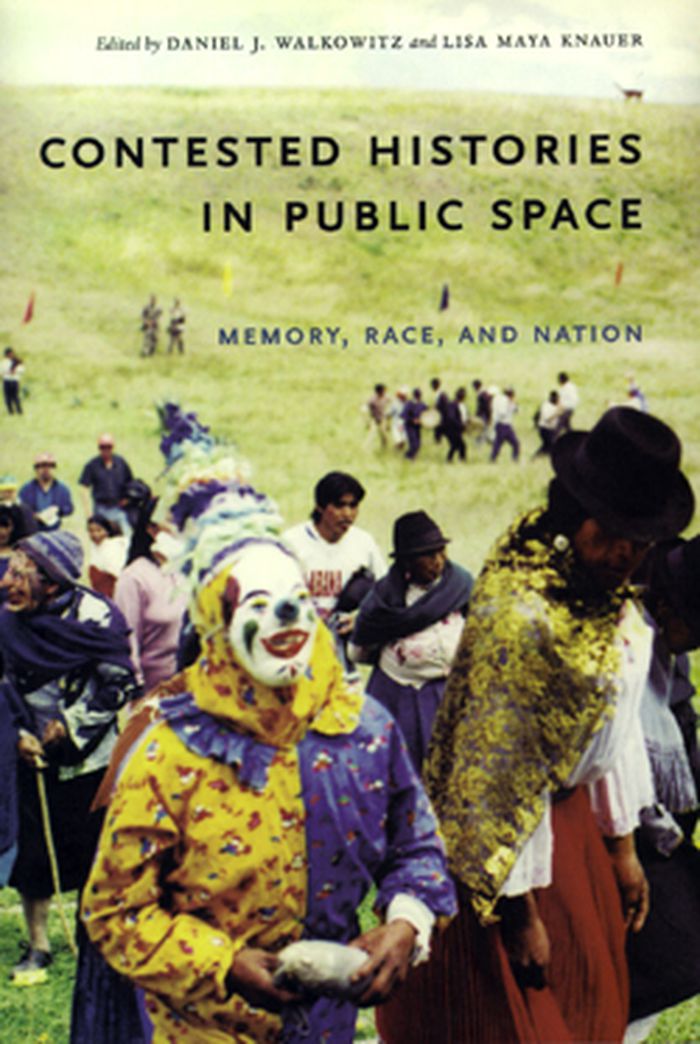
Contested histories in public space: memory, race and nation
Actions:
Prix:
$29.99
(disponible sur commande)
Résumé:
Contested Histories in Public Space brings multiple perspectives to bear on historical narratives presented to the public in museums, monuments, texts, and festivals around the world, from Paris to Kathmandu, from the Mexican state of Oaxaca to the waterfront of Wellington, New Zealand. Paying particular attention to how race and empire are implicated in the creation and display of national narratives, the contributing historians, anthropologists, and other scholars delve into representations of contested histories at such “sites” as a British Library exhibition on the East India Company, a Rio de Janeiro shantytown known as “the cradle of samba,” the Ellis Island immigration museum, and high-school history textbooks in Ecuador.
Contested histories in public space: memory, race and nation
Actions:
Prix:
$29.99
(disponible sur commande)
Résumé:
Contested Histories in Public Space brings multiple perspectives to bear on historical narratives presented to the public in museums, monuments, texts, and festivals around the world, from Paris to Kathmandu, from the Mexican state of Oaxaca to the waterfront of Wellington, New Zealand. Paying particular attention to how race and empire are implicated in the creation and display of national narratives, the contributing historians, anthropologists, and other scholars delve into representations of contested histories at such “sites” as a British Library exhibition on the East India Company, a Rio de Janeiro shantytown known as “the cradle of samba,” the Ellis Island immigration museum, and high-school history textbooks in Ecuador.
Classification:
livres
livres
Publication:
février 2009, Durham & London
février 2009, Durham & London
Sujet:
Muséologie
Muséologie
Classification:
livres
livres

Prix:
$115.00
(disponible en magasin)
Résumé:
The German architect and theorist Gottfried Semper was a founder of Modernism. Forced to leave Dresden in 1849, he composed this important manifesto on the phenomenology of materials and the systematization of the ideal museum while in exile. Published in transcription for the first time, with original line breaks, this volume includes all drawings and some manuscript(...)
$115.00
(disponible en magasin)
Résumé:
The German architect and theorist Gottfried Semper was a founder of Modernism. Forced to leave Dresden in 1849, he composed this important manifesto on the phenomenology of materials and the systematization of the ideal museum while in exile. Published in transcription for the first time, with original line breaks, this volume includes all drawings and some manuscript(...)
Publication:
décembre 2008, Vienna, Los Angeles
décembre 2008, Vienna, Los Angeles
Titre:
The ideal museum ; practical art in metals and hard materials
Actions:
Prix:
$115.00
(disponible en magasin)
Résumé:
The German architect and theorist Gottfried Semper was a founder of Modernism. Forced to leave Dresden in 1849, he composed this important manifesto on the phenomenology of materials and the systematization of the ideal museum while in exile. Published in transcription for the first time, with original line breaks, this volume includes all drawings and some manuscript pages in facsimile.
The ideal museum ; practical art in metals and hard materials
Actions:
Prix:
$115.00
(disponible en magasin)
Résumé:
The German architect and theorist Gottfried Semper was a founder of Modernism. Forced to leave Dresden in 1849, he composed this important manifesto on the phenomenology of materials and the systematization of the ideal museum while in exile. Published in transcription for the first time, with original line breaks, this volume includes all drawings and some manuscript pages in facsimile.
Classification:
livres
livres
Publication:
décembre 2008, Vienna, Los Angeles
décembre 2008, Vienna, Los Angeles
Classification:
livres
livres

Actions:
Prix:
$32.99
(disponible sur commande)
Résumé:
Première traduction française d'un ouvrage incontournable de la théorie de l'art. Ici est rassemblé les quatre essais initialement publiés entre 1976 et 1981, une postface véhémente publiée en 1986 et un cinquième essai qui en constitue la conclusion. L'auteur identifie dans ces essais le cube blanc de la galerie comme pôle complémentaire du tableau moderniste, il(...)
$32.99
(disponible sur commande)
Résumé:
Première traduction française d'un ouvrage incontournable de la théorie de l'art. Ici est rassemblé les quatre essais initialement publiés entre 1976 et 1981, une postface véhémente publiée en 1986 et un cinquième essai qui en constitue la conclusion. L'auteur identifie dans ces essais le cube blanc de la galerie comme pôle complémentaire du tableau moderniste, il(...)
Titre:
White cube, l'espace de la galerie et son idéologie
Actions:
Prix:
$32.99
(disponible sur commande)
Résumé:
Première traduction française d'un ouvrage incontournable de la théorie de l'art. Ici est rassemblé les quatre essais initialement publiés entre 1976 et 1981, une postface véhémente publiée en 1986 et un cinquième essai qui en constitue la conclusion. L'auteur identifie dans ces essais le cube blanc de la galerie comme pôle complémentaire du tableau moderniste, il développe également une véritable dramaturgie de la perception, où l'espace d'exposition est le laboratoire d'un art qui ne se conçoit plus sans sa relation au spectateur.
White cube, l'espace de la galerie et son idéologie
Actions:
Prix:
$32.99
(disponible sur commande)
Résumé:
Première traduction française d'un ouvrage incontournable de la théorie de l'art. Ici est rassemblé les quatre essais initialement publiés entre 1976 et 1981, une postface véhémente publiée en 1986 et un cinquième essai qui en constitue la conclusion. L'auteur identifie dans ces essais le cube blanc de la galerie comme pôle complémentaire du tableau moderniste, il développe également une véritable dramaturgie de la perception, où l'espace d'exposition est le laboratoire d'un art qui ne se conçoit plus sans sa relation au spectateur.
Classification:
livres
livres
Publication:
décembre 2008, Zürich
décembre 2008, Zürich
Sujet:
Muséologie
Muséologie
Classification:
livres
livres
Actions:
Prix:
$53.95
(disponible sur commande)
Résumé:
'The Exhibitionist: Journal on Exhibition Making' is an anthology of the first 12 issues of the journal about contemporary curating that bears the same name. Established in 2009 as a forum for critical reflection on exhibition-making and curatorial practice, The Exhibitionist has always defined itself as “by curators, for curators.” Modeled after the iconic French film(...)
$53.95
(disponible sur commande)
Résumé:
'The Exhibitionist: Journal on Exhibition Making' is an anthology of the first 12 issues of the journal about contemporary curating that bears the same name. Established in 2009 as a forum for critical reflection on exhibition-making and curatorial practice, The Exhibitionist has always defined itself as “by curators, for curators.” Modeled after the iconic French film(...)
Titre:
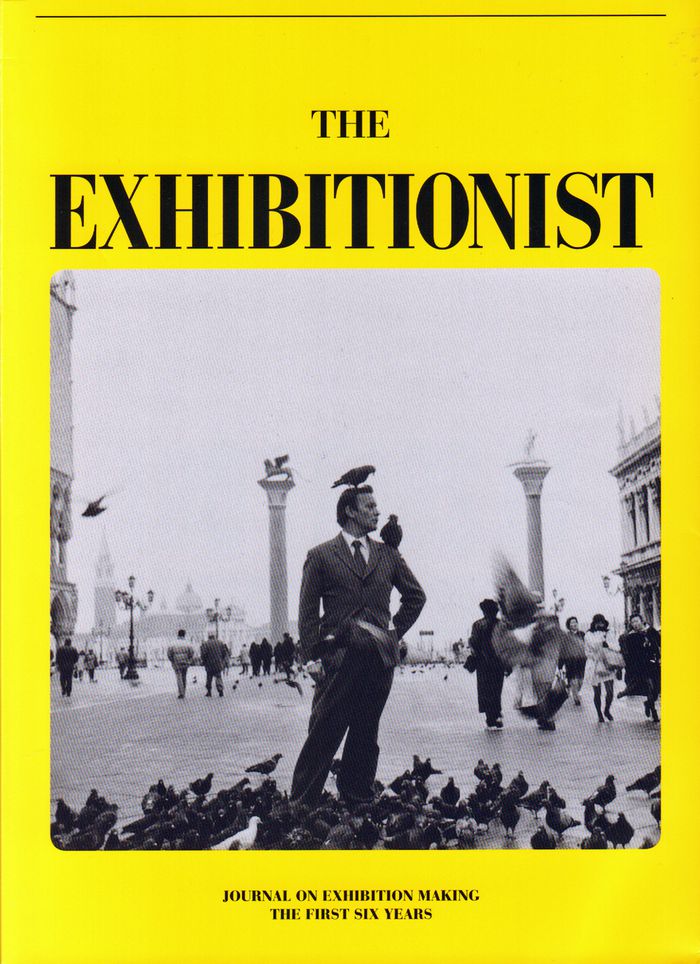
The Exhibitionist: journal on exhibition making. The first six years
Actions:
Prix:
$53.95
(disponible sur commande)
Résumé:
'The Exhibitionist: Journal on Exhibition Making' is an anthology of the first 12 issues of the journal about contemporary curating that bears the same name. Established in 2009 as a forum for critical reflection on exhibition-making and curatorial practice, The Exhibitionist has always defined itself as “by curators, for curators.” Modeled after the iconic French film journal Cahiers du cinéma, The Exhibitionist has served a critical role in examining current curatorial practices by focusing specifically on the exhibition format as a site of experimentation and inquiry. The Exhibitionist has historicized, analyzed and critiqued a phenomenon it is itself symptomatic of—the rise of the curator since the 1960s, the ensuing explosion of curatorial creativity and the growing fascination with the discipline of curating.
The Exhibitionist: journal on exhibition making. The first six years
Actions:
Prix:
$53.95
(disponible sur commande)
Résumé:
'The Exhibitionist: Journal on Exhibition Making' is an anthology of the first 12 issues of the journal about contemporary curating that bears the same name. Established in 2009 as a forum for critical reflection on exhibition-making and curatorial practice, The Exhibitionist has always defined itself as “by curators, for curators.” Modeled after the iconic French film journal Cahiers du cinéma, The Exhibitionist has served a critical role in examining current curatorial practices by focusing specifically on the exhibition format as a site of experimentation and inquiry. The Exhibitionist has historicized, analyzed and critiqued a phenomenon it is itself symptomatic of—the rise of the curator since the 1960s, the ensuing explosion of curatorial creativity and the growing fascination with the discipline of curating.
Classification:
livres
livres
Publication:
février 2017
février 2017
Sujet:
Muséologie
Muséologie


